The evidence
Photographs from the survey, exactly as taken.
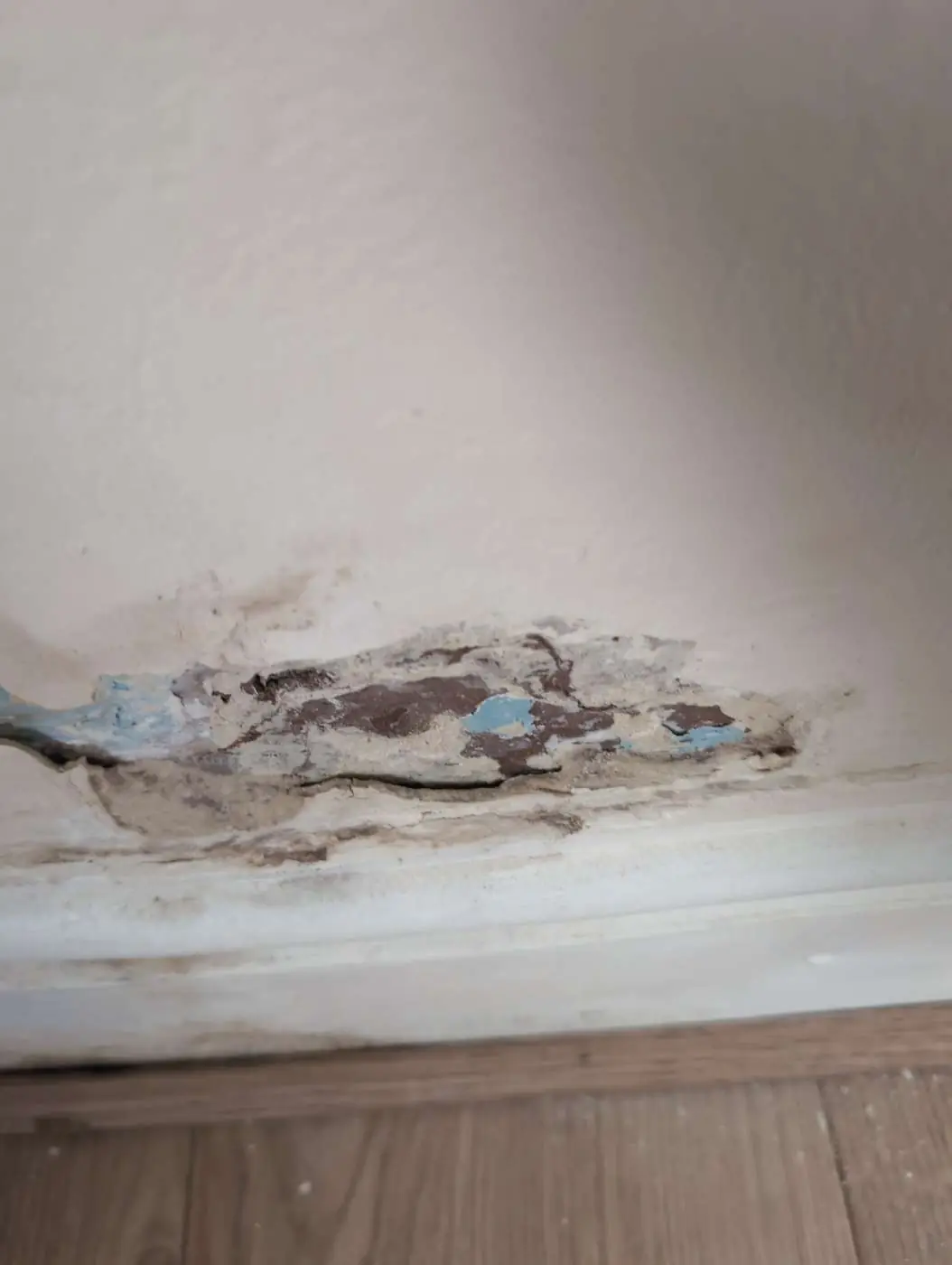
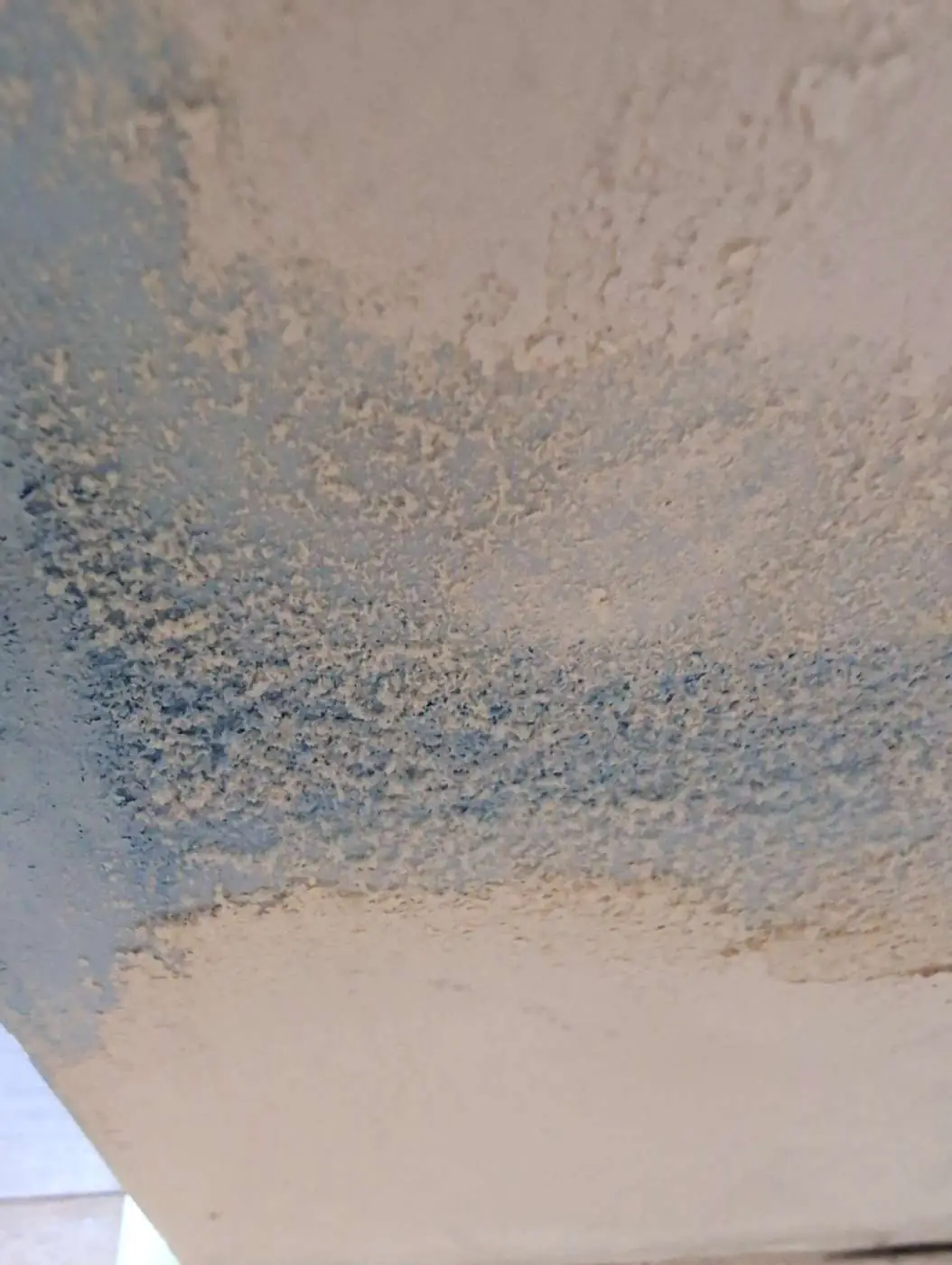
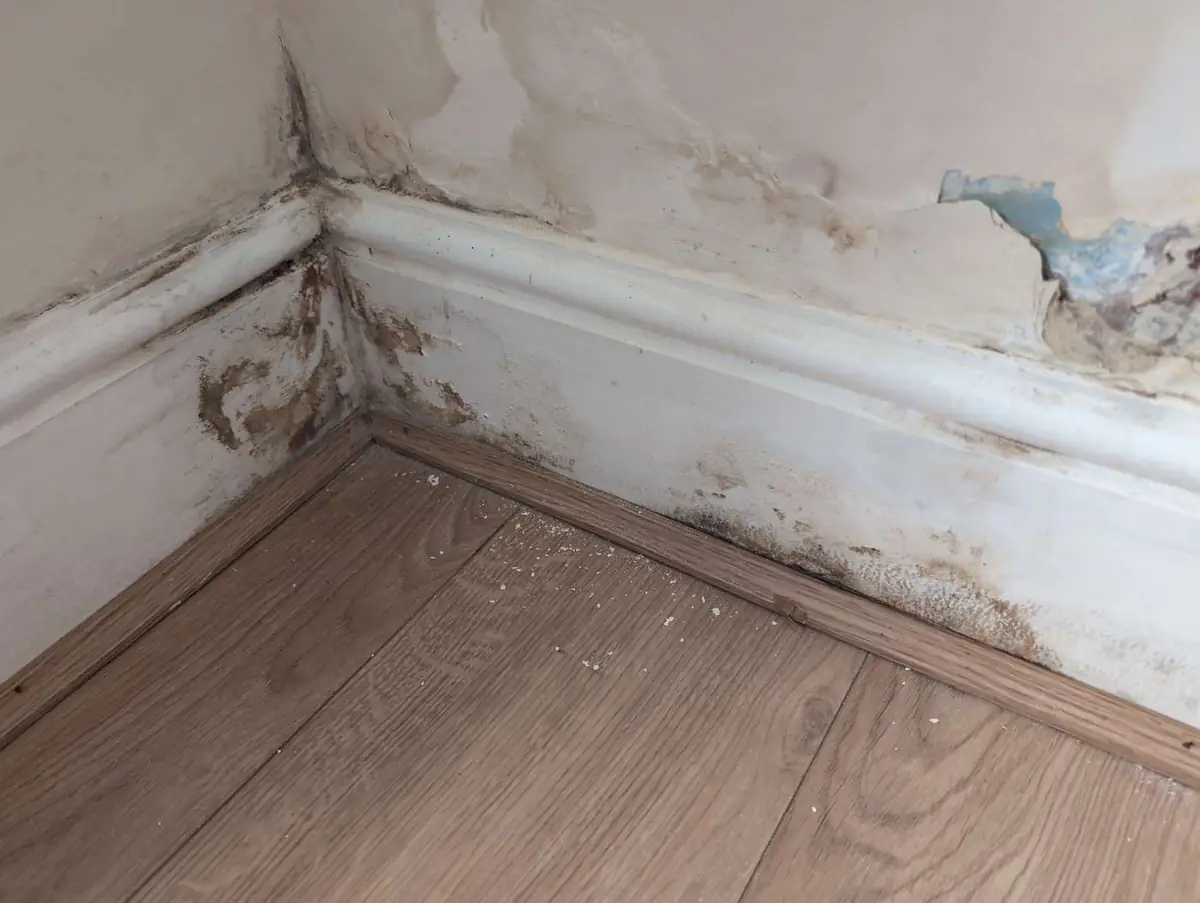
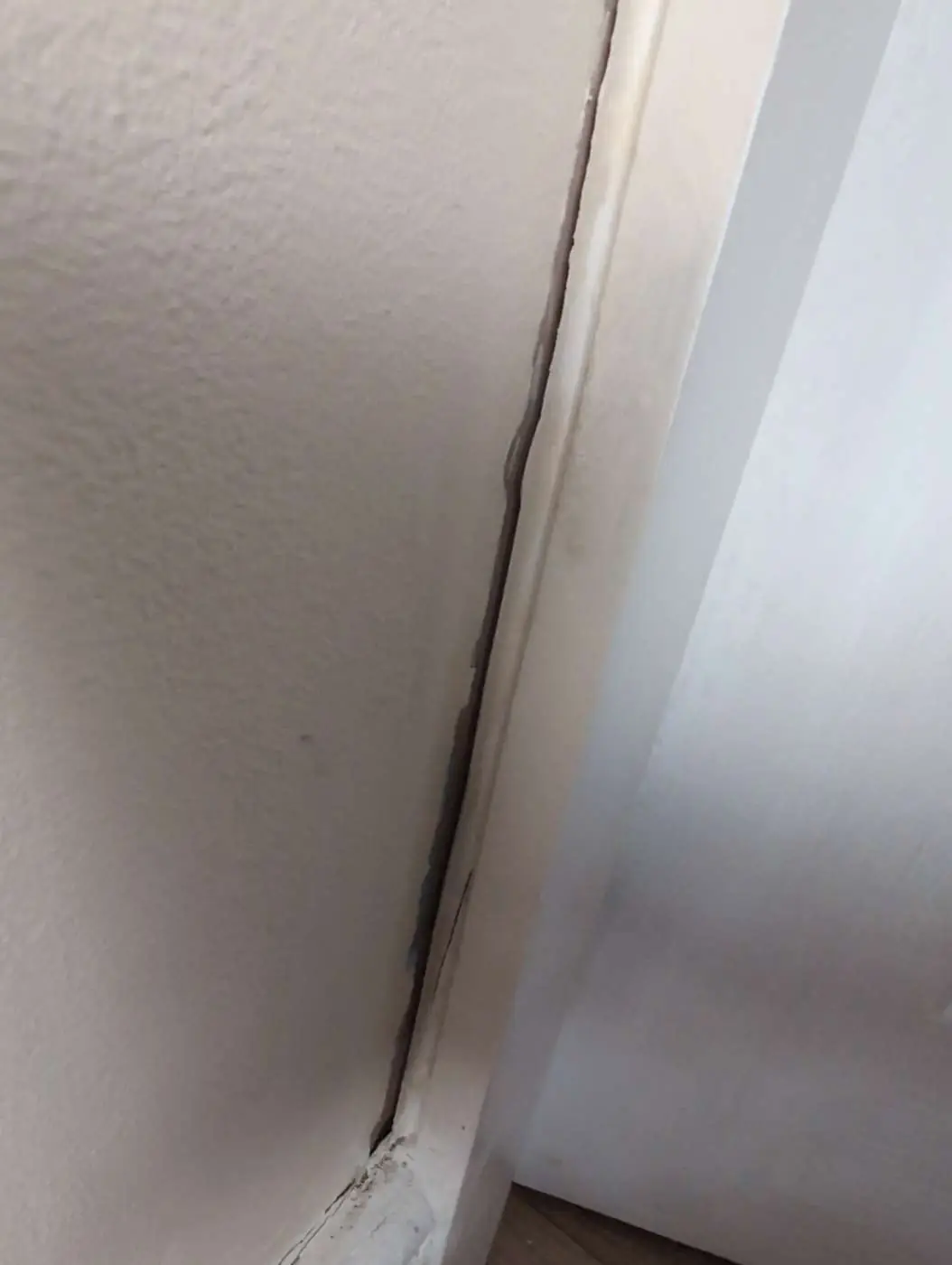
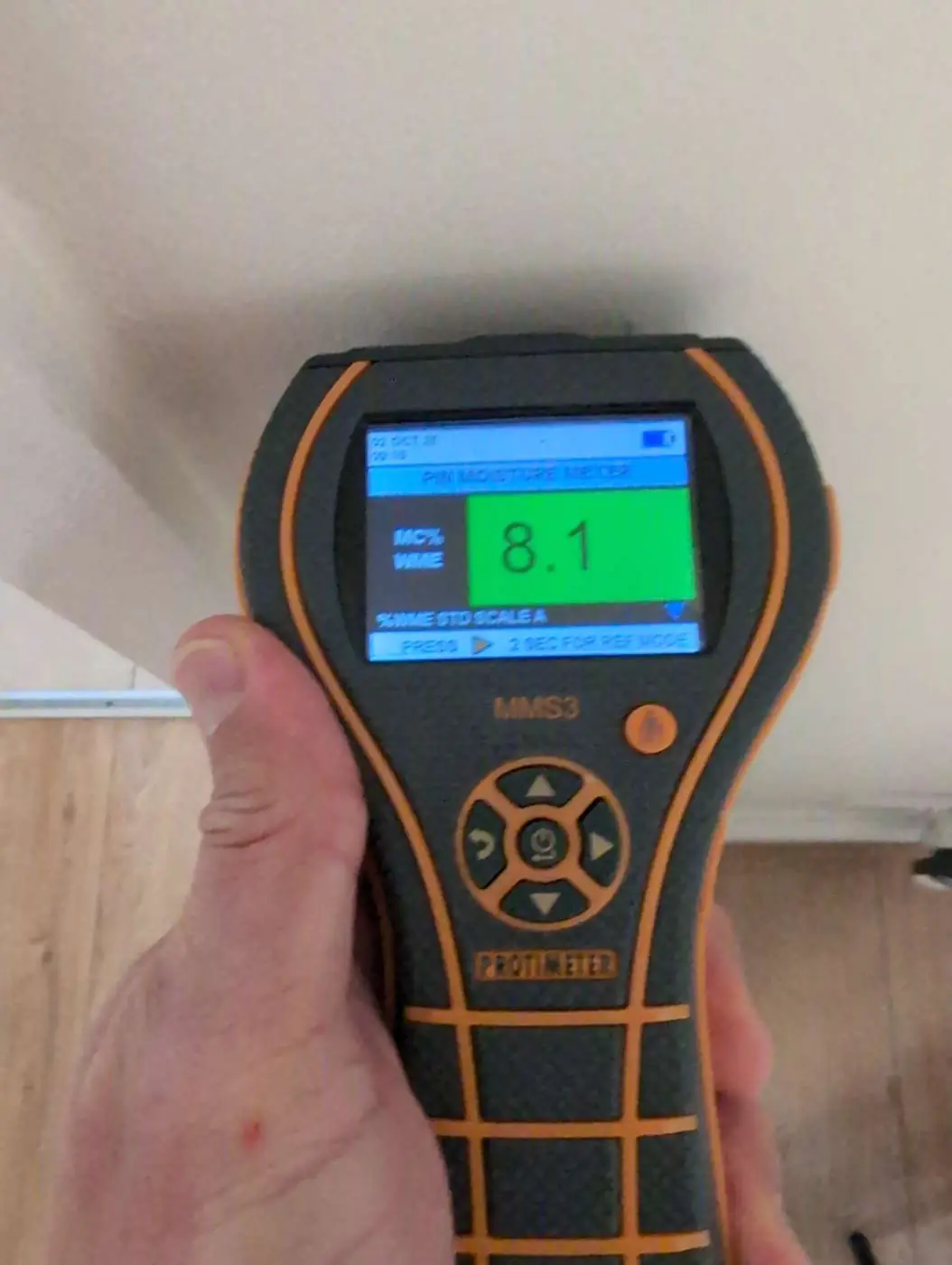
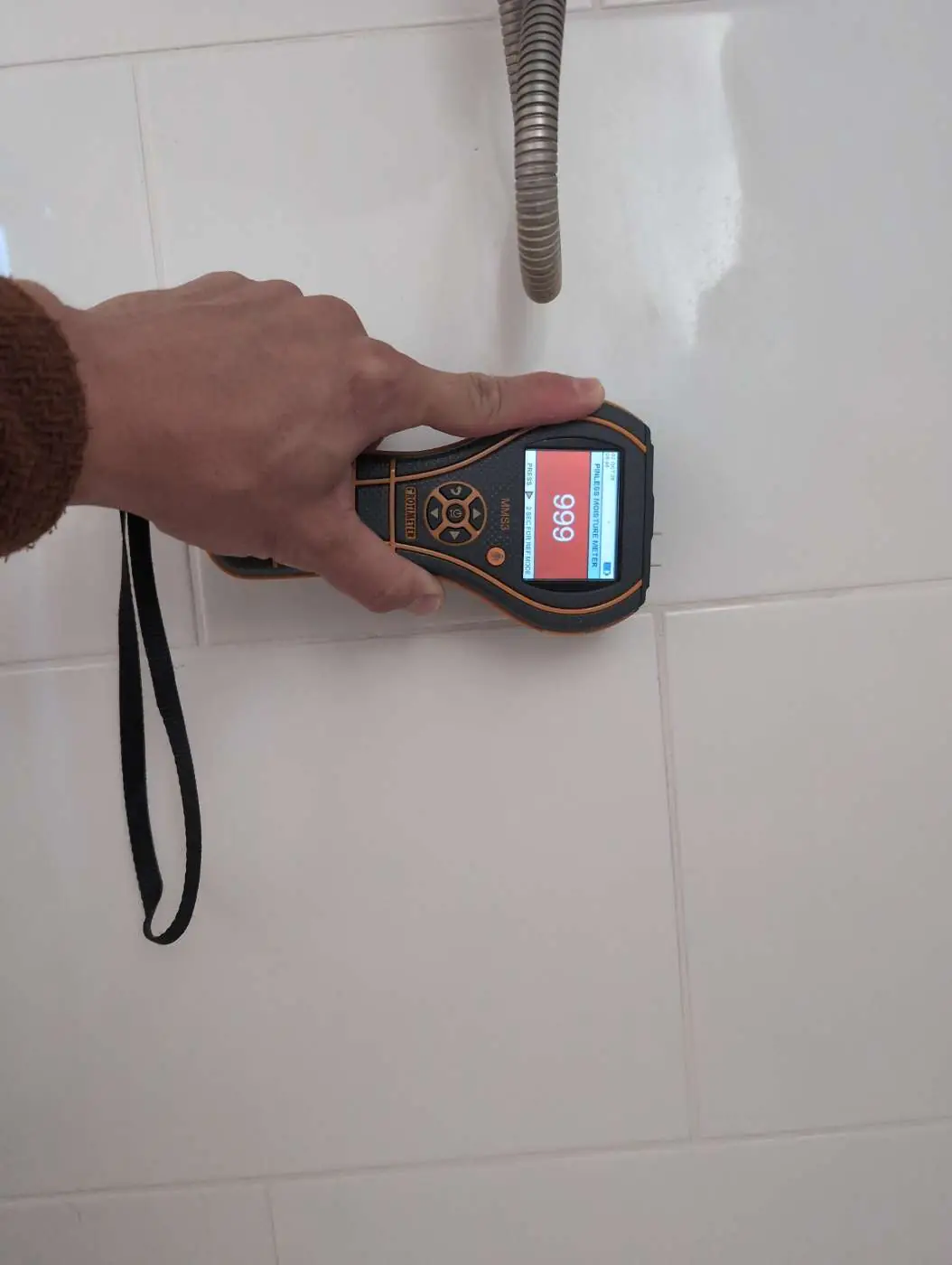
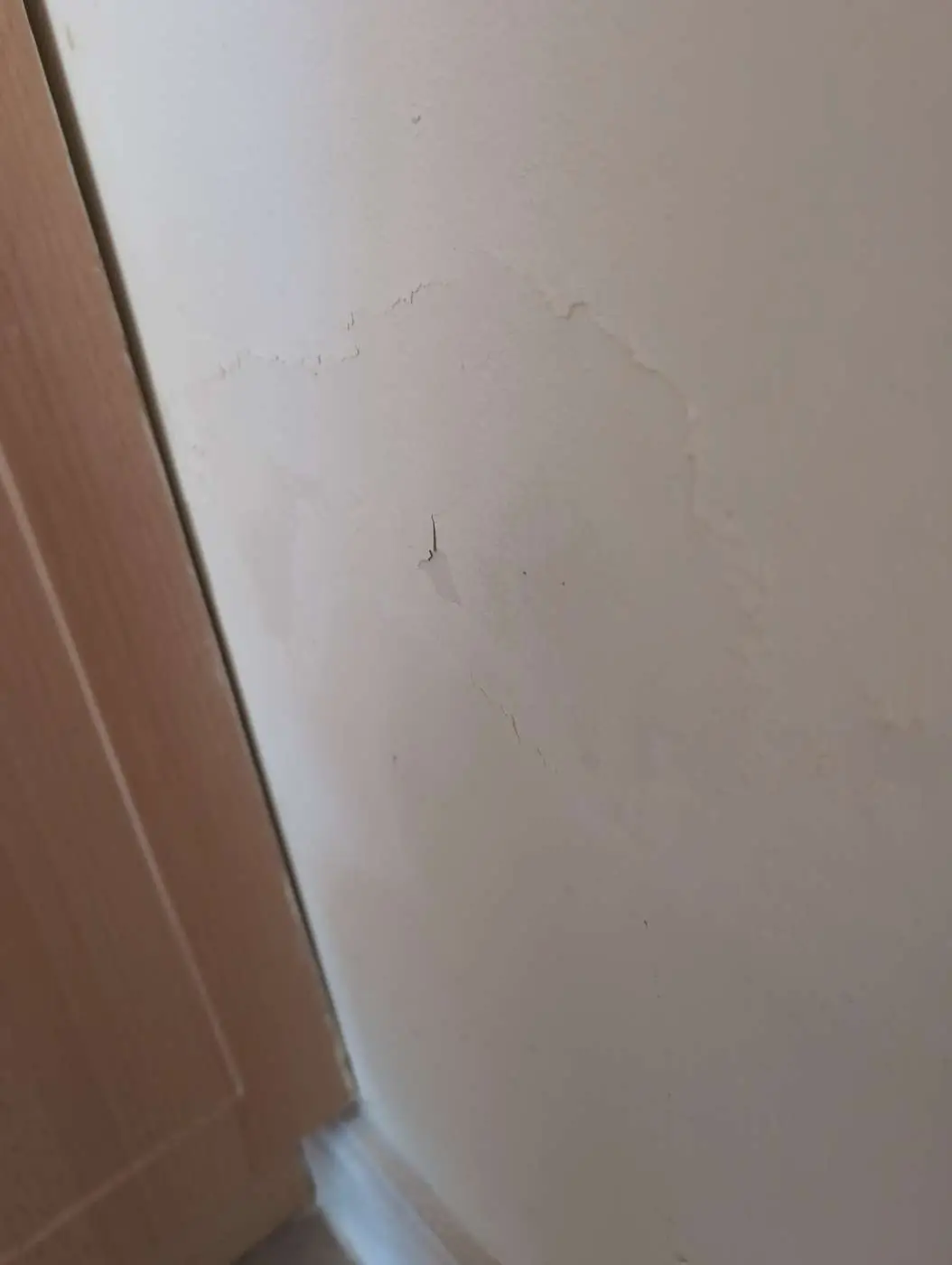
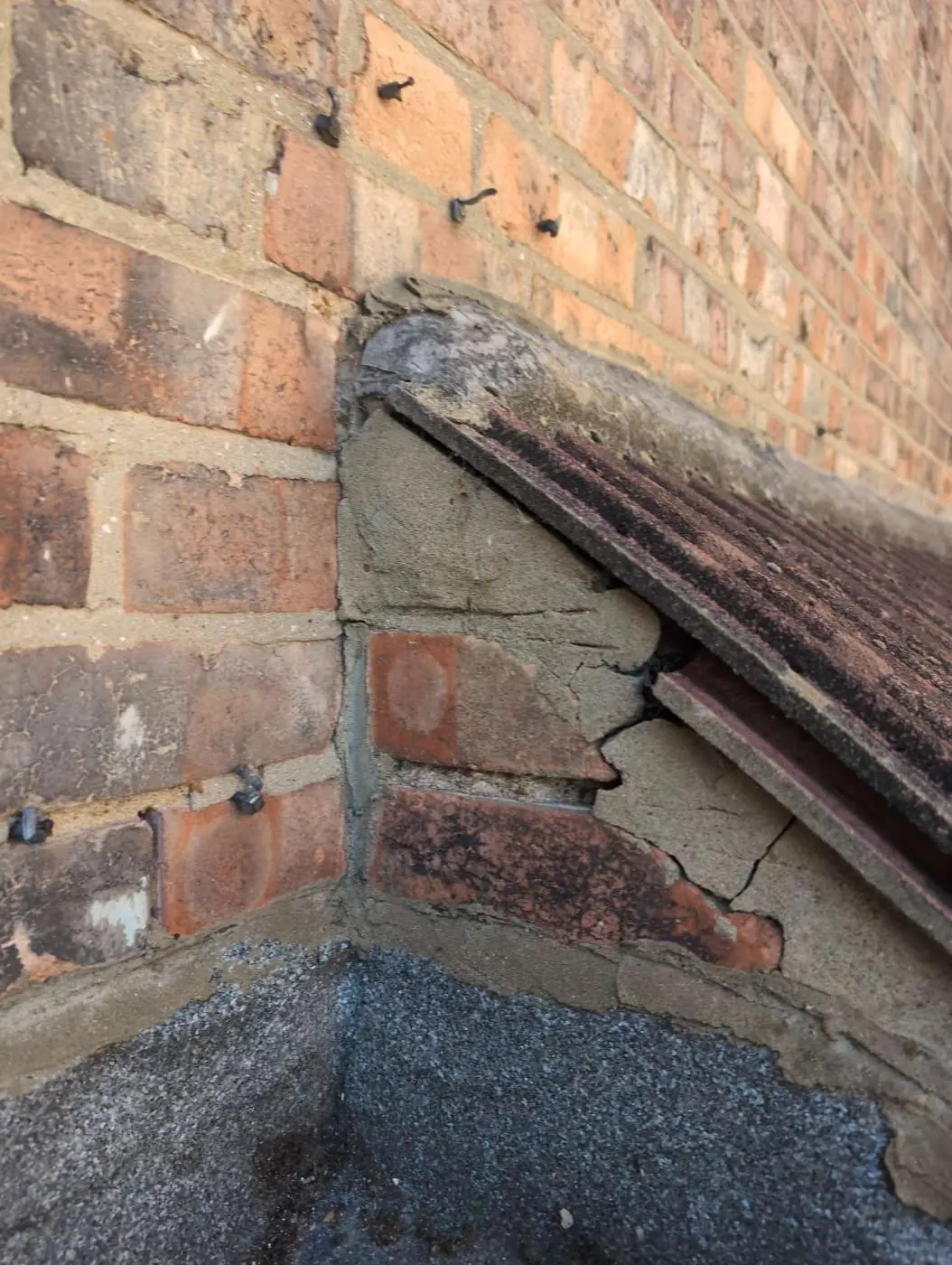
Damp at the base of an old chimney breast, worse in winter and in wet weather, that had carried on after a leak from the shower room behind it. The readings peaked at knee height, not at the floor, and the boiler was losing water somewhere.
See exactly what you get: read a real Vigilant report, published with the client's permission.
The owner's account, recorded as given: there was no obvious damp some years ago. Then came a significant leak from the shower room, which may have run for close to a year. The shower was replaced and retiled. The damp has continued since, mild in summer and worse in winter and in wet weather, starting at skirting level. No damp treatment had been carried out.
The owner also reported that the boiler has to be topped up with water about five times a year.
We were asked to find the source, and to establish whether there is still an active source of moisture.
A semi detached house of 1850 to 1918, of solid brick, assumed from the age and type of the house and not established by opening up. The damage is at the base of an old chimney breast in the living room, its return, and the wall to the kitchen, left of the door. The shower room sits on the other side of the chimney breast.
This was a focused survey: the living room and the kitchen, with readings from the shower room behind the chimney breast, environmental readings in the hallway, and the side elevation and the lean to roof seen from a ladder. It was raining lightly at the inspection, after light rain in the previous 48 hours.
Before any reading in the problem area means anything, we take a control reading on an unaffected part of the same room. Here the control right of the door to the kitchen read 8.1 %WME. In the kitchen, the control read 9.8.
Then the affected wall was mapped at four heights.
| Height | Right of the radiator | Chimney breast return | Centre, at the socket | Left of the kitchen door | Left of the kitchen door, at the frame |
|---|---|---|---|---|---|
| 200mm below ceiling | not reached | 9.5 | 9.4 | 8.3 | 10.4 |
| 1200mm | not reached | 10.4 | 12.3 | 11.3 | 9.9 |
| 600mm | 13.2 | 83.1 | 100 | 100 | 70.2 |
| Skirting, 100mm | 8.5 | 21.2 | 20.4 | 20.6 | 14.4 |
The readings peak at 600mm, not at the base. Rising damp shows as a band along the base of a wall, highest at the skirting and falling with height. This wall does the opposite: 13.2 to 21.2 at the skirting, 83.1 to 100 at 600mm, and back to 8.3 to 12.3 at 1200mm and below the ceiling. The same wall right of the door reads 8.1 and 9.7. That is one localised corner, not a band.
| Measured | Result |
|---|---|
| Control, living room | 8.1 %WME |
| Control, kitchen | 9.8 %WME |
| External wall of the living room, below the window | 6.1 to 13.6 %WME, the dry band |
| Kitchen face of the same wall, left of the door | 23.0 at 500mm, 14.0 at 100mm, 14.6 at 770mm |
| Kitchen face, right of the door | 15.3 and 9.7 |
| Shower tiles, the other face of the wall, pinless | 999, the top of the scale |
| Kitchen floor tiles at the foot of the wall, pinless | 570 and 731 on the meter's relative scale |
| Thermal image, foot of the wall left of the kitchen door | about 16.7 °C, against 18.3 to 19.7 °C around it |
| Coldest surface in each room, above dew point | 3.5 to 5.4 degrees |
A pinless reading is comparative only, and tiles and their adhesive can affect it, but the reading on the shower tiles fits the readings on the living room side. The cool patch on the thermal image is consistent with damp material cooling as it evaporates.
The damage is confined to one corner and both faces of one wall, around the junction of three things:
The shower room, on the other side of the chimney breast, where the pinless meter hit the top of its scale on the tiles. The damp began after a leak from this room.
A radiator valve and its pipework, at floor level at the chimney breast return, directly below the damage. The boiler has to be topped up about five times a year, so water is being lost from the heating somewhere.
The old chimney breast itself. Years of burning leave flue salts in a chimney breast which draw moisture from the air with no leak at all. The breast is not vented in the room. The type of salt was not tested, so flue salts on the breast cannot be ruled out.
Efflorescence, the white crystals left on the surface as water evaporates, shows that water has moved through the wall, and the salts it leaves then hold moisture in the plaster. An electrical meter reads salts and moisture alike, so these readings cannot by themselves separate the two.
What tips the balance is the history. The damp followed the shower room leak, has continued since the shower was replaced, and has recently spread on the kitchen side. That points to a source which is still active, rather than a wall drying out from an old leak.
Possibly, and the report says so. Outside, where the lean to roof meets the main wall and changes pitch, the cement fillet has cracked and come away from the brickwork, and the cement verge has shrunk and cracked. Rain running down the exposed wall can get in behind it, and from outside this roughly corresponds, by eye, to the affected corner. It fits the owner's account that the damp is worse in wet weather, so it cannot be excluded. It needs repairing whatever the other checks show.
The chimney stack over the old breast has been removed, and how the top of the flue was closed could not be seen.
Photographs from the survey, exactly as taken.
On the evidence it is highly probable, though not confirmed, that the damp is caused by water getting into the base of the wall at the old chimney breast, and that the source is still active.
The most probable source is a leak in the services around that corner: either the shower room on the other side of the wall, through its waste, tray seal or supply, or the heating pipework at the radiator valve directly below the damage, given that the boiler is losing water. The cracked cement fillet at the lean to roof is a second route, and fits the damp being worse in wet weather.
It is not rising damp. The readings peak at 600mm, not at the base, and the rest of the wall reads dry. A damp proof course injection would not help and is not recommended. It is not condensation.
The order matters more than anything else on this page.
First, check the shower. Remove the panel beneath the shower tray, run the shower, and inspect the waste, the trap, the tray seal, the supply pipework and the power shower unit. A slow leak from a waste or seal can run unseen for a long time, and nothing else will hold until it is stopped.
At the same time, pressure test the heating, including the radiator valve and pipework at the chimney breast return, and repair any leak found. This needs doing before any samples are taken.
Re form the lean to roof junction with a proper flashing in place of the cracked cement fillet, and repair the cement verge. Anything letting water into the structure is urgent.
Then the smaller external defects: seal the open joint between the render and the brickwork at the side window, and cut the render plinth back so it finishes above the damp proof course with a drip edge, keep the air bricks clear, and form an air drain where the paving meets the wall.
Only once the leaks are found and repaired and the wall has had a drying period, take drilled samples to confirm the salts and their height, remove the salt contaminated plaster from the chimney breast, its return and both faces of the wall to the kitchen, replace the corroded corner beads, and replaster with a system designed for salt contaminated masonry.
In the meantime, clean the mould with detergent and water or a mould and mildew cleaner and dry thoroughly. Bleach is not needed. Removing the growth is what matters.
Do not have the wall injected with a damp proof course. It is not rising damp. Do not replaster before the water is stopped, or with an ordinary plaster, because either will see the same damage again.
The report records this as highly probable on the evidence, not confirmed, and names what would close the gap: checking the shower with the panel beneath the tray removed and the shower running, and a pressure test of the heating system. If both are sound, a recheck of the corner after heavy rain, measured against the living room control of 8.1 %WME, would test the lean to roof. Before any replastering, drilled samples from the corner, the chimney breast and the kitchen side, tested for moisture and salts, would show how much is water, how much is salt, and how high the replastering needs to go.
Fixed fee from £350. We carry out no remedial work, sell no products, and take no commission or referral fee from anyone who carries out repairs.
Request a call back How we survey