The evidence
Photographs from the survey, exactly as taken.
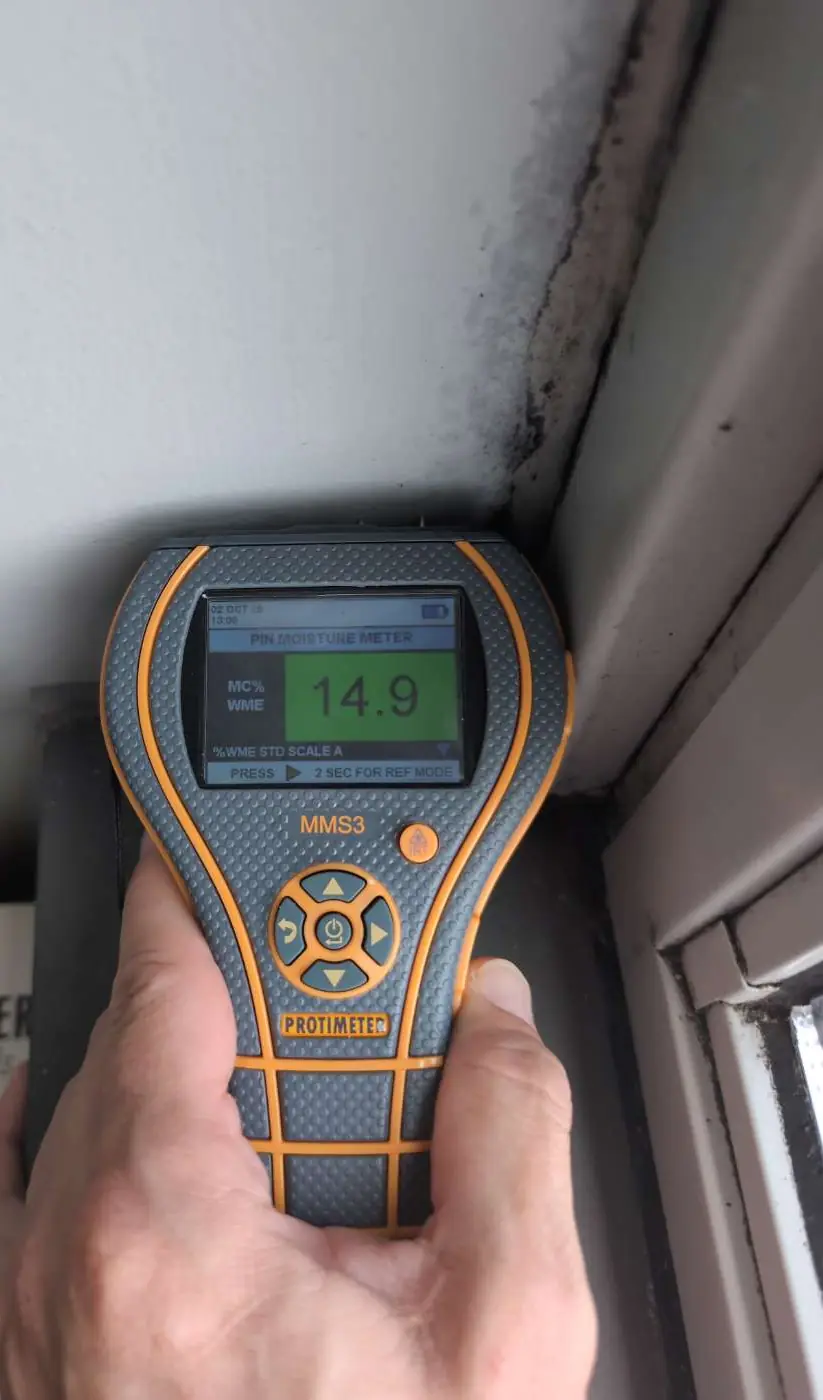
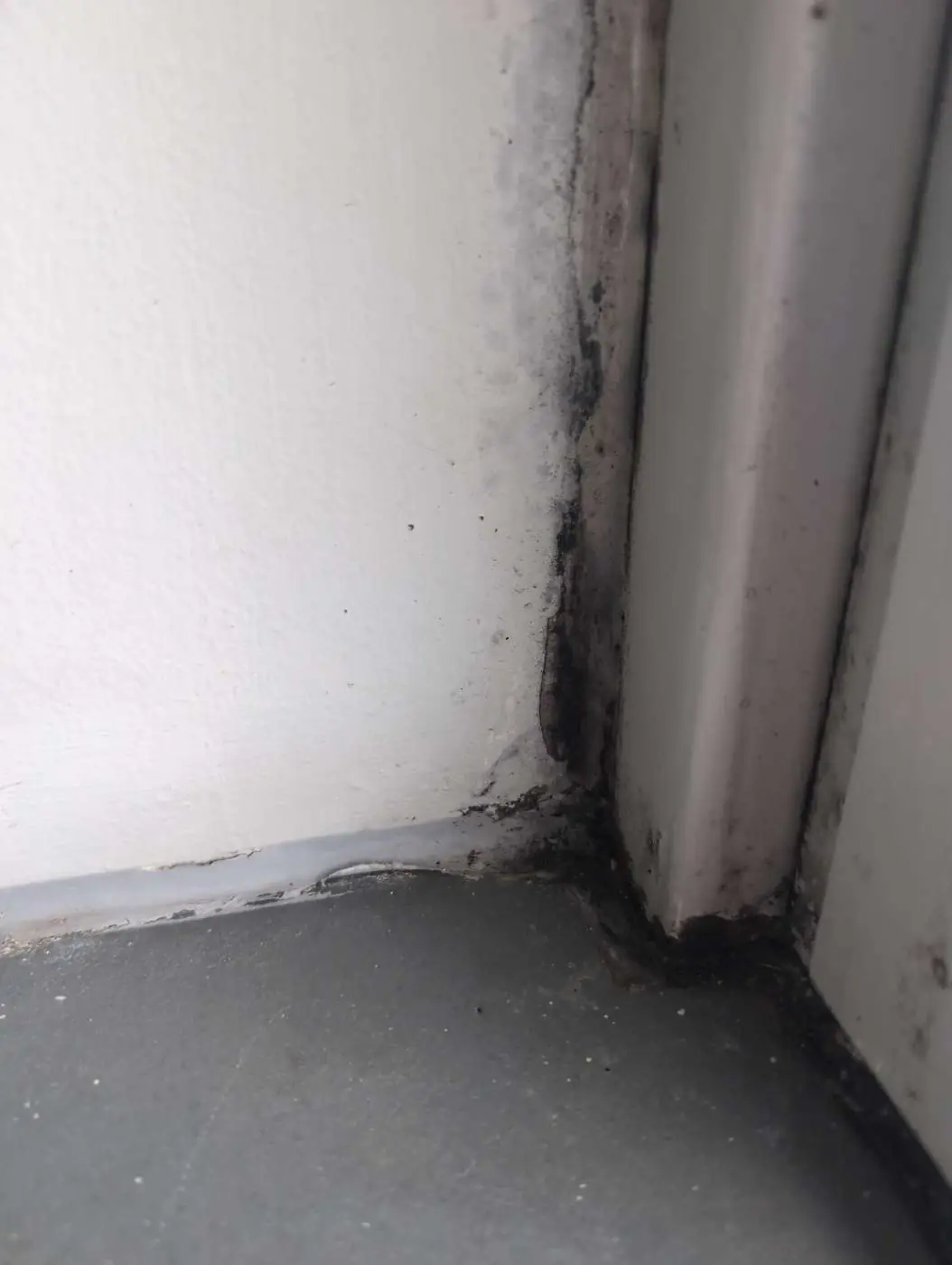
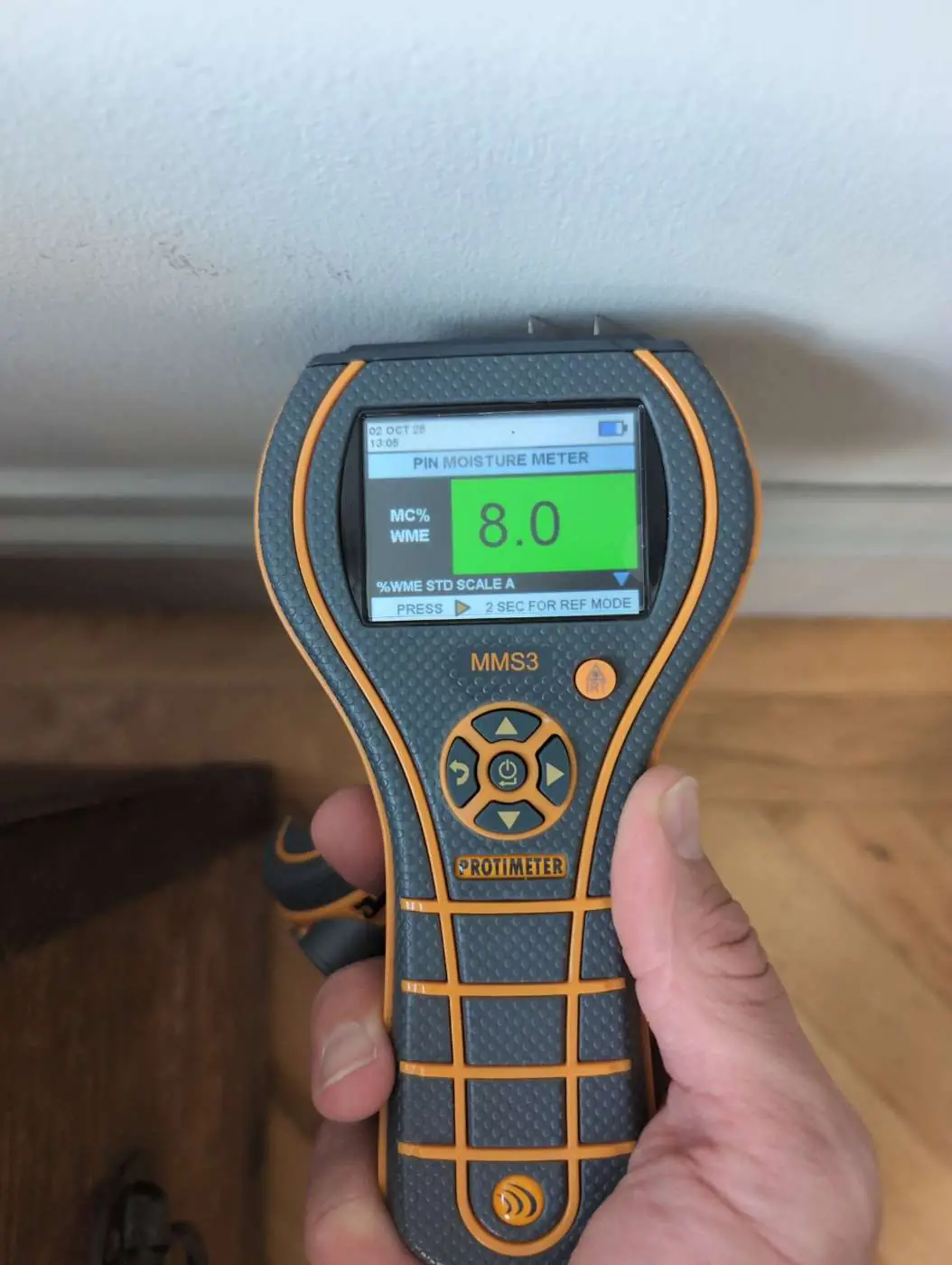

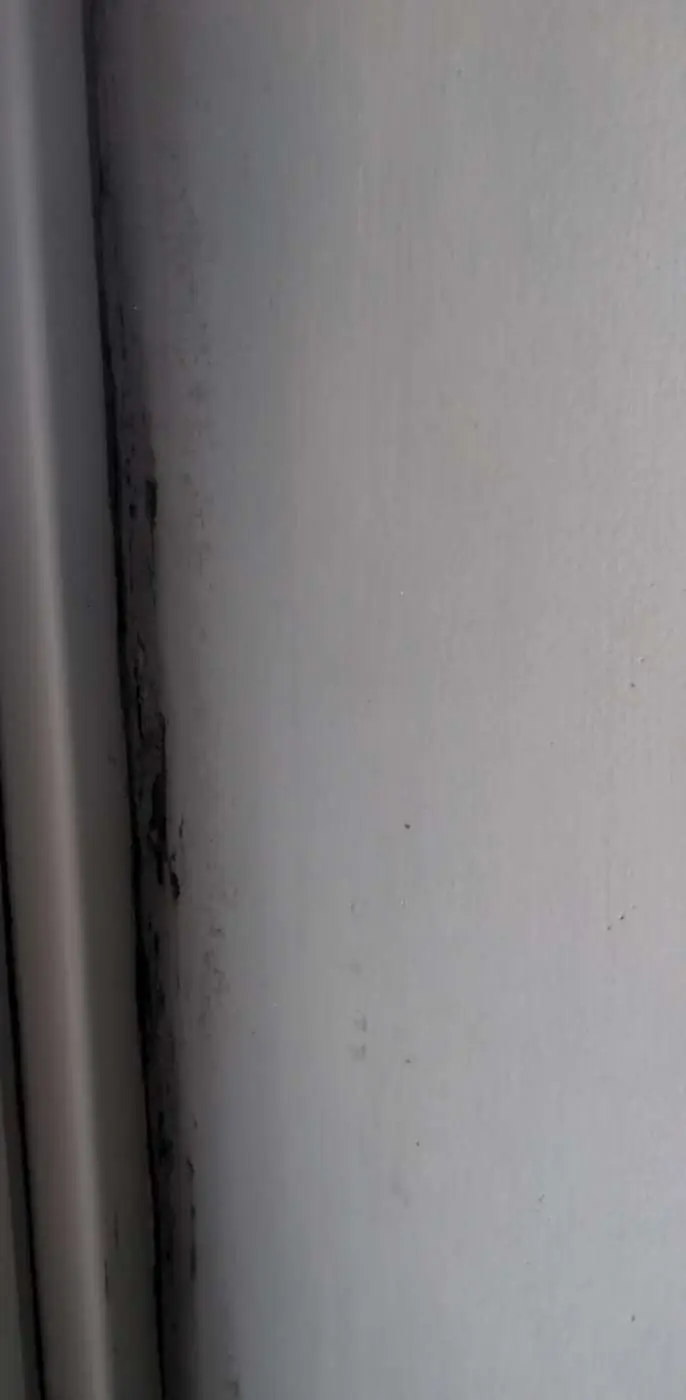
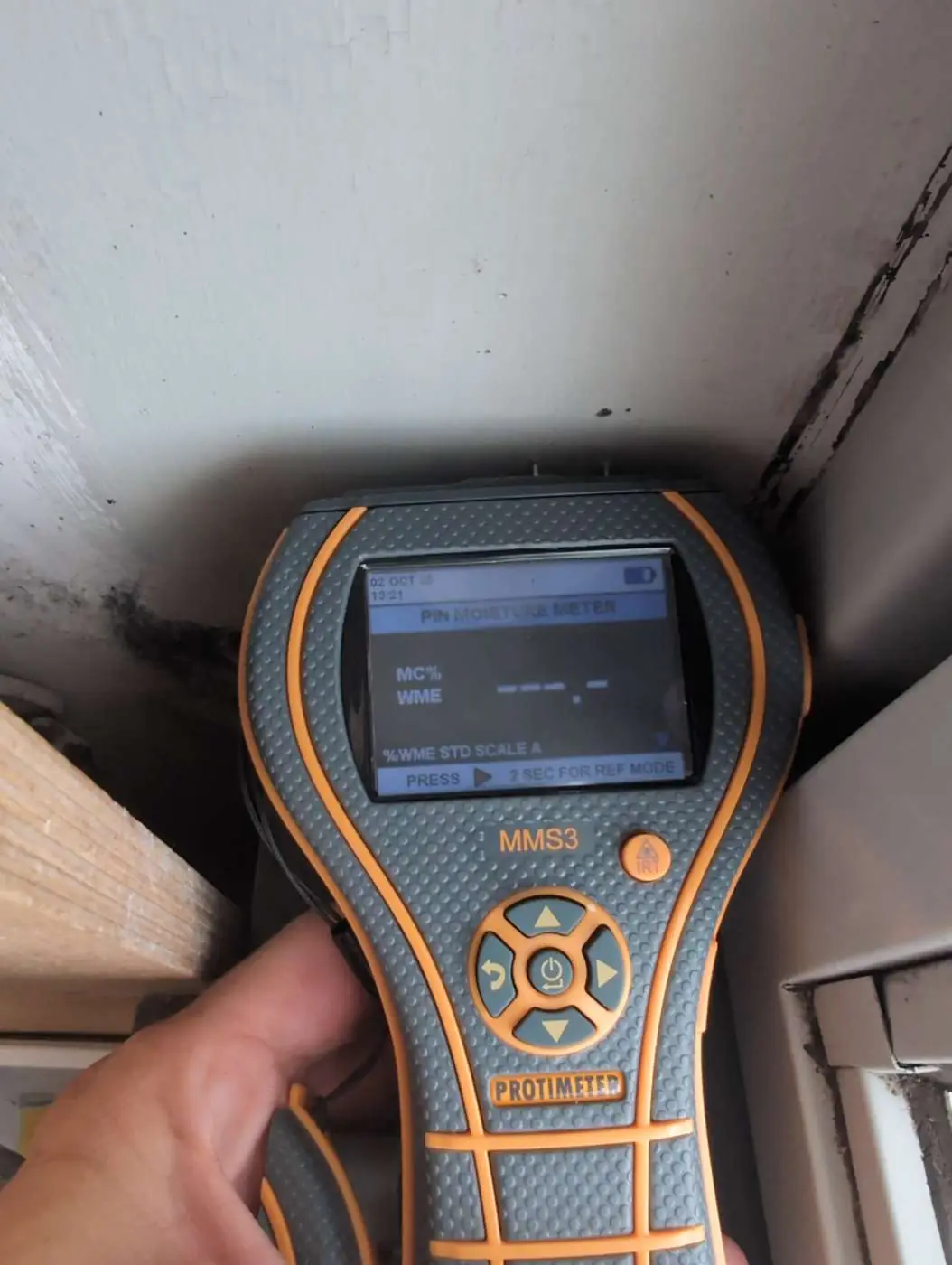
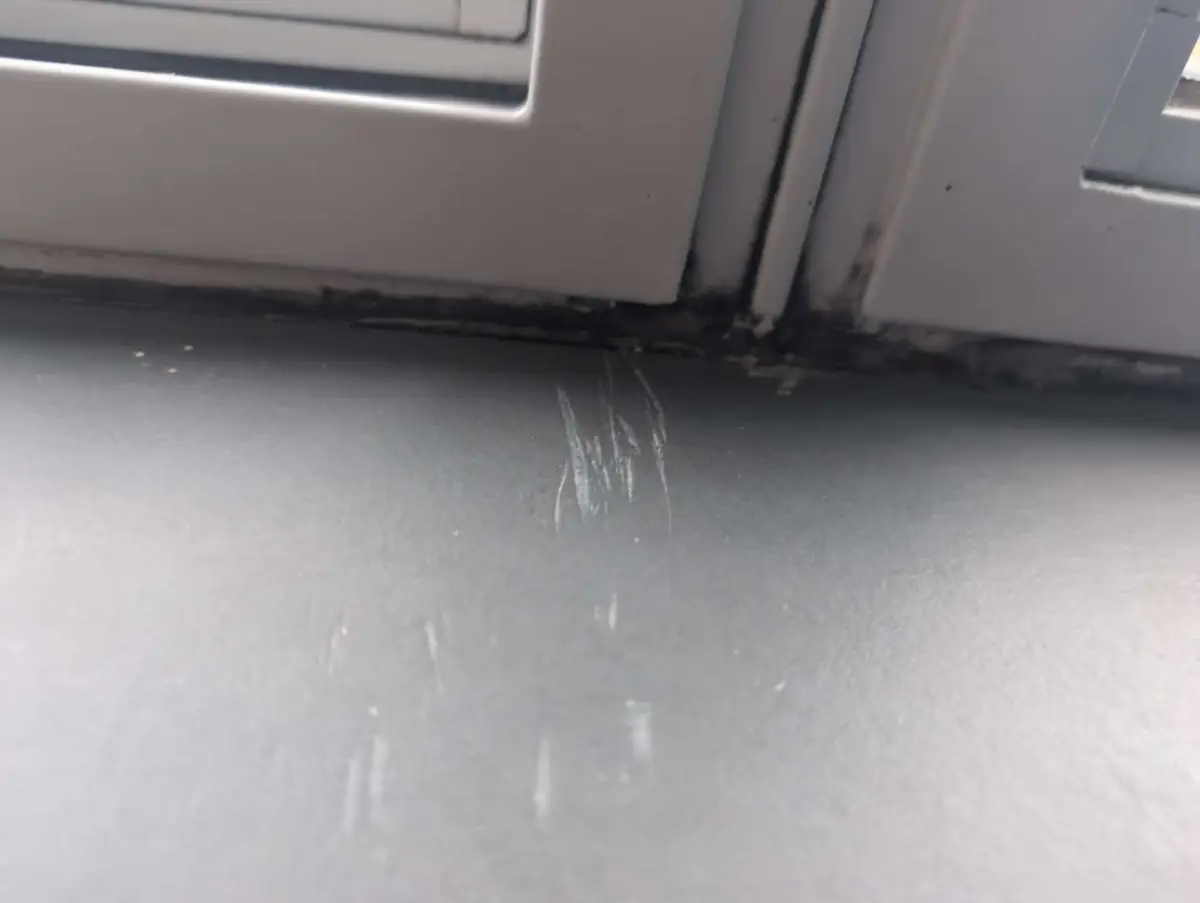
Condensation and mould around the steel framed windows of a flat, worse in the winter, in the living room, the bedroom and the home office. The mould follows the line of the frames in every room. The plaster beneath it reads dry.
See exactly what you get: read a real Vigilant report, published with the client's permission.
The occupier described condensation and mould around the period steel framed windows and at the skirting, worse in the winter, with condensation on the glass. Nobody had advised on it before.
We were asked what is causing it and how far it has gone.
A purpose built flat on an upper floor, its age not recorded. Single glazed windows in steel frames in all three affected rooms, window ventilation only, no trickle vents, and doors undercut by about 4mm.
This was a focused survey of the living room, bedroom 1 and the home office, with moisture, temperature and humidity readings and thermal imaging in each. It was a dry, mild day. That matters, and the report says so plainly: this is a dry day inspection of a winter problem, so the conclusion is drawn from the pattern of the damage and the readings rather than from condensation seen forming.
| Room | Control | Reveal beside the frame, under the mould |
|---|---|---|
| Living room | 8.0 %WME | 14.9 left, where the mould is heaviest, 7.6 right |
| Bedroom 1 | 8.2 %WME | Lo, below 6 %WME, both sides |
| Home office | 7.3 %WME | Lo, below 6 %WME |
The reveals read at or below the controls, below the range of the meter in the bedroom and the office. The one exception, the left living room reveal at 14.9, is still in the dry band, and sits where condensation runs off the glass into the bottom corner.
| Room | Air | Dew point | Coldest surface, above dew point |
|---|---|---|---|
| Living room | 23 °C, 60.6% RH | 15 °C | 8.4 degrees |
| Bedroom 1 | 24.5 °C, 58.2% RH | 15.7 °C | 7.2 degrees |
| Home office | 25.5 °C, 57.5% RH | 16.5 °C | 5.1 degrees |
No condensation was forming on the day, and the thermal scan found no anomaly in any of the three rooms. The vapour pressure inside was 1.70 to 1.88 kPa against 1.29 kPa outside, an excess of 0.41 to 0.58 kPa. As an indication from a single visit, that is a fair amount of moisture in the air for a day when the windows can be opened. In cold weather, the same moisture meets glass and steel at outside temperature.
Single glass and steel both lose heat fast, so in cold weather the glass and the frames run far colder than the room. Moisture in the air condenses on the glass and runs down onto the sills and into the corners.
The steel also cools the plaster it touches. Steel conducts heat many times faster than plaster, so where the frame meets the reveal, the reveal is chilled along the junction, a cold bridge, and condensation forms on the plaster there as well. That is where the mould grows, and why it is worse in the winter.
The sealant at the frames now holds mould within it, which will not clean out.
In the home office, mould also forms low on the external wall behind the desk, where furniture and boxes stand hard against it. That wall was the coldest surface found in the room, at 21.6 °C.
Photographs from the survey, exactly as taken.
On the evidence it is highly probable, though not confirmed on a dry day, that the mould is caused by condensation from the single glazed steel framed windows. Water condenses on the cold glass and runs onto the sills, and the cold steel frames chill the plaster of the reveals beside them, so condensation forms there too.
It is not rain getting in, not a leak and not rising damp.
The windows themselves are the cold surface, so this will recur each winter for as long as single glazed steel frames are in place. What can be done is to take moisture out of the air, keep air moving past the windows, and make the reveals and sealant hold less mould.
Get the moisture down first. Run a quiet dehumidifier in each of the three rooms through the colder months, sized to the room: a 12 litre a day unit in the living room, and a 10 litre a day unit in bedroom 1 and in the home office. The sizes come from the room measurements taken on the day. Set it to hold the room at 50 to 55 per cent with the door closed. On the day the rooms were at 57.5 to 60.6 per cent.
Ventilate in short bursts. In cold weather, open the windows wide for five to ten minutes first thing each morning, and leave a window slightly open where it is safe to do so. Wipe the glass and sills dry each morning when condensation has formed.
Let air move between rooms. Increase the gap under the doors from about 4mm to around 10mm.
Keep furniture and boxes a hand's width off the external walls, in particular behind the desk in the home office.
Clean the mould with detergent and water or a mould and mildew cleaner, and dry thoroughly. Bleach is not needed. Removing the growth is what matters.
Once the moisture is under control, cut out the mould stained silicone where the frames meet the plaster and the sills, and reseal with a silicone containing a mould inhibitor. Then rub down the reveals, prime with a mould resistant primer and redecorate. A mould resistant finish does not stop condensation forming, so it works alongside the measures above, not instead of them.
Do not redecorate before the moisture is controlled. It will see the mould come back in the first cold spell.
The report records this as highly probable on the evidence, not confirmed, and names what would close the gap: a recheck in cold weather, or a few weeks of logged temperature and humidity in each room through the winter, with surface temperatures taken on the glass, the frames and the reveals on a cold morning and compared with the dew point. The controls of 7.3 to 8.2 %WME are the benchmark for the reveal readings, and the logging would also show whether the dehumidifiers are bringing the humidity down enough.
Fixed fee from £350. We carry out no remedial work, sell no products, and take no commission or referral fee from anyone who carries out repairs.
Request a call back How we survey