The evidence
Photographs from the survey, exactly as taken.
A buyer's Level 2 survey had flagged damp in three areas of a detached bungalow. We were asked to look at each of them, and at the rest of the property, before the purchase went ahead. Every flagged area had a cause that could be put right, and none of the causes was ground moisture.
See exactly what you get: read a real Vigilant report, published with the client's permission.
The buyer's Level 2 survey had flagged damp in three areas: the base of the conservatory walls, the en suite skirtings, and the loft. We were asked for a whole property damp survey before the purchase, to look at each of those areas and the rest of the property, establish the causes, and set out the class of works needed.
We do not comment on another surveyor's report. This survey answers a narrower question, what is causing the damp, and it sits alongside a building survey rather than replacing it. It is not a valuation and does not replace one.
A detached bungalow built between 1981 and 2002, with an oil fired boiler, used continuously, which the occupier reports does not need topping up. Every room, the loft and all four elevations were inspected. The garage was inspected visually only, as its electrics were off. The property was furnished and occupied, and no opening up was carried out.
The day was dry, after light rain in the previous 48 hours.
| Where | Reading | Control |
|---|---|---|
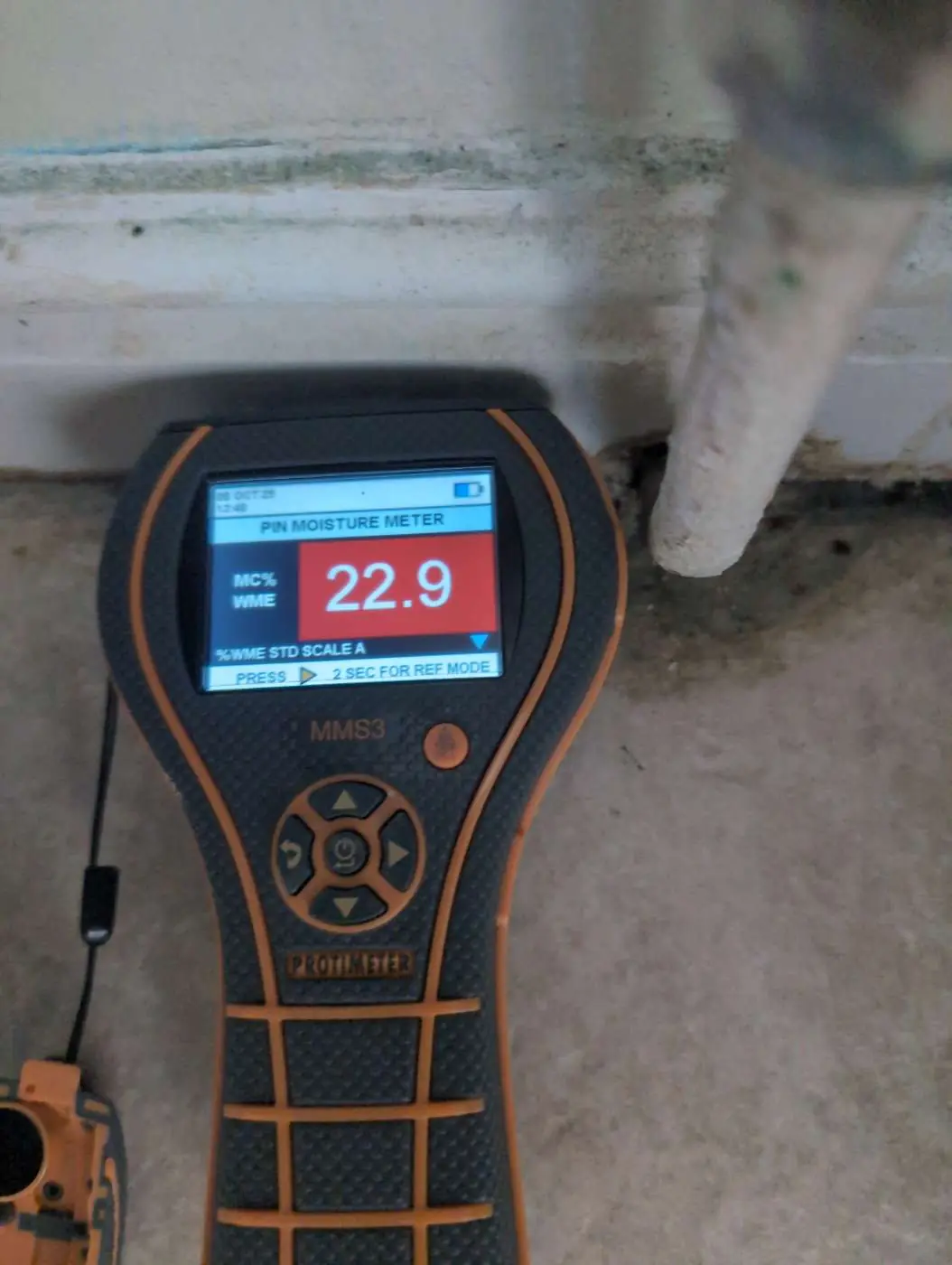
| Skirting between the WC and the bidet, with mould | 22.9 %WME | 7.3 |
| Skirting right of the shower, water damaged | 20.6 %WME | 7.3 |
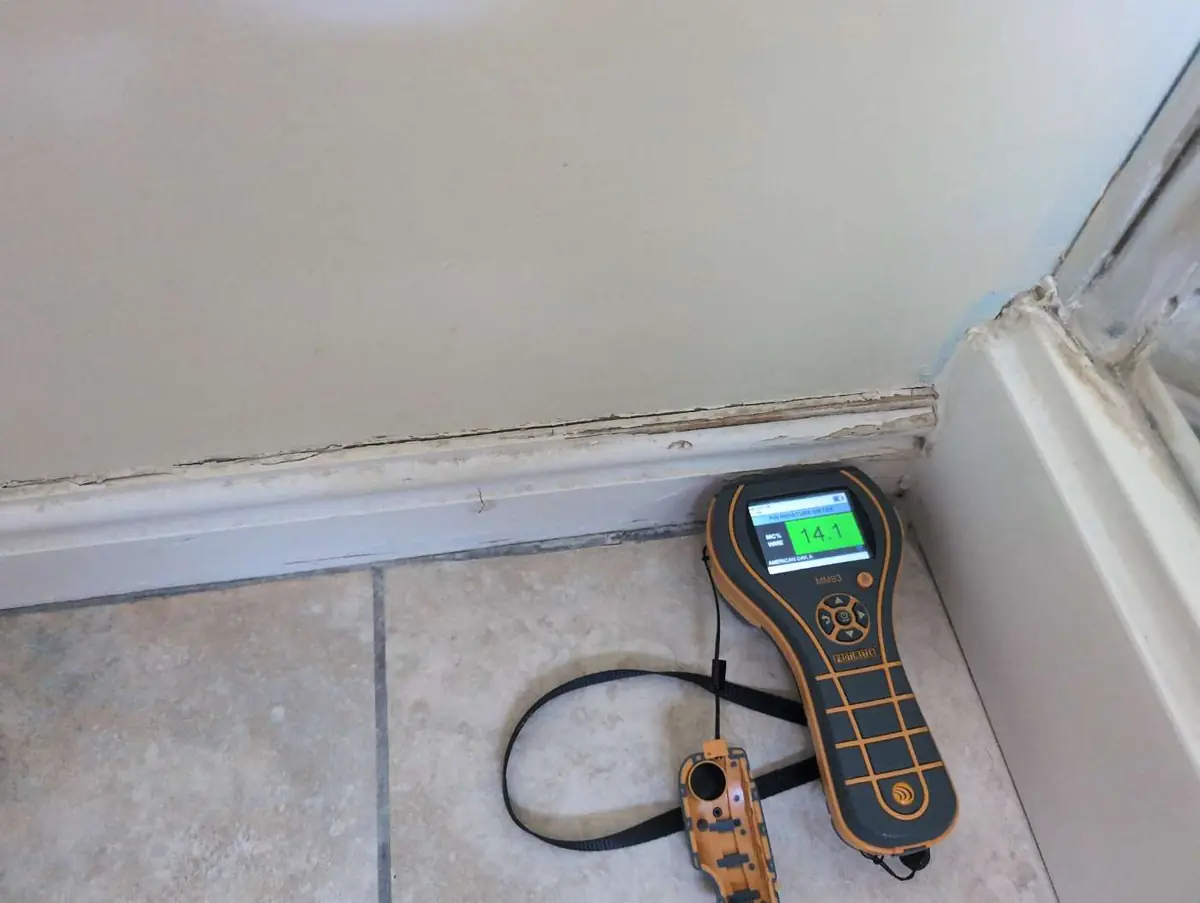
| Skirting left of the shower, at the doorway, water damaged | 14.1 %WME | 7.3 |
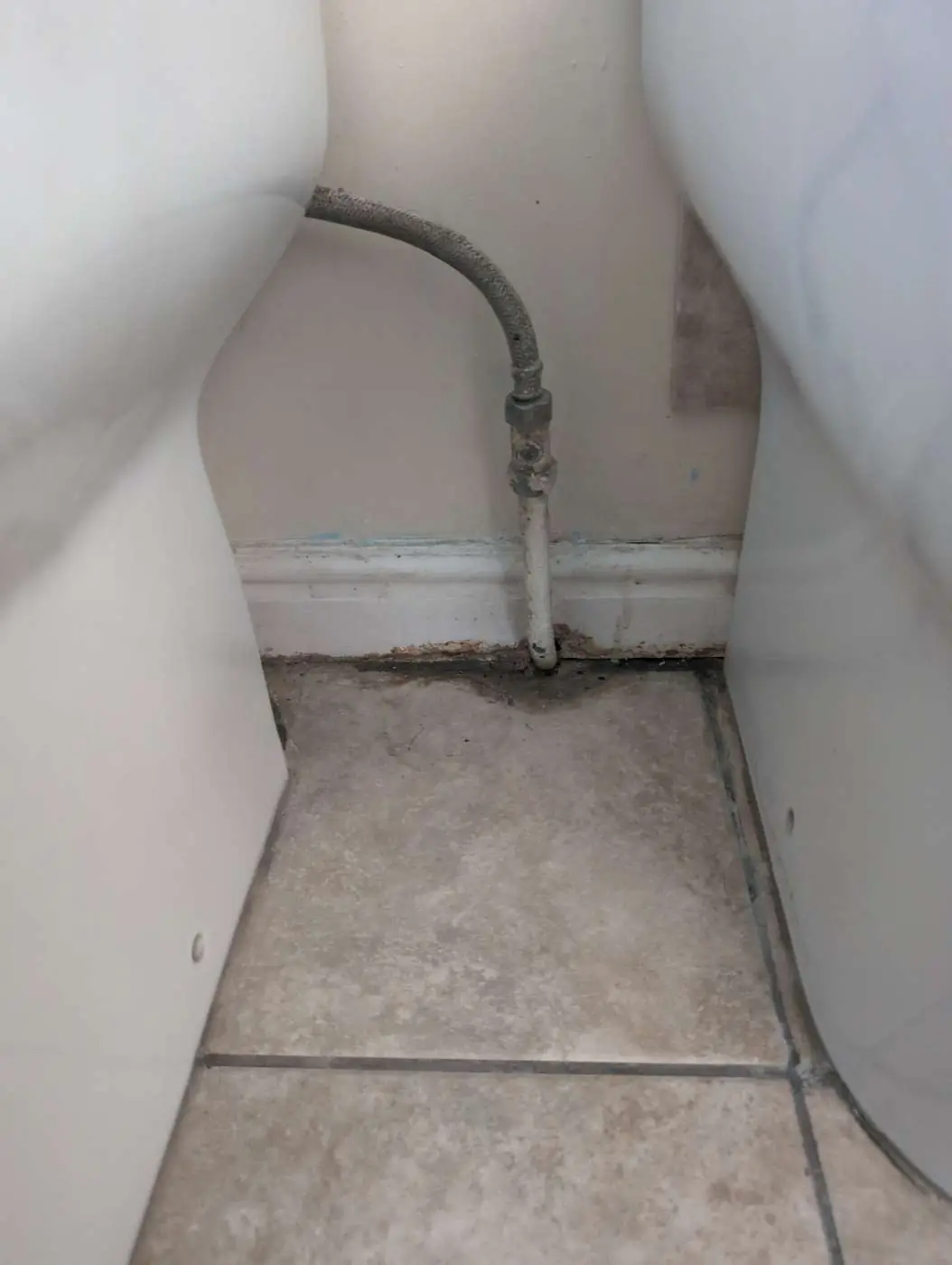
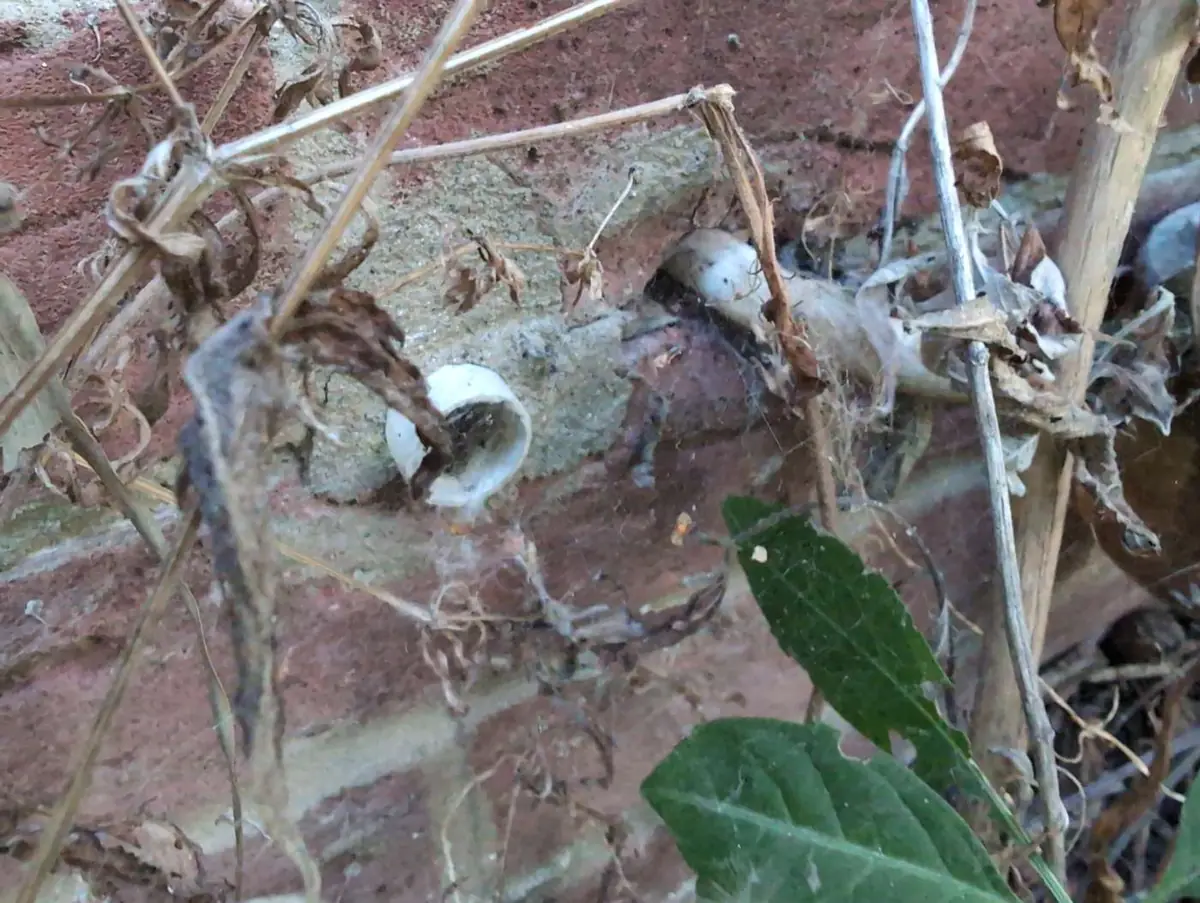
The 22.9 sits exactly where the incoming cold water main rises out of the floor. The pipe is not lagged, and outside on the east wall the opening in the brickwork around it is not sealed. Mains water is cold, so the pipe and the skirting against it run well below room temperature, and moisture in the en suite air condenses on them. That is the most probable cause. A slow leak on the main or on the WC and bidet supplies cannot be ruled out without a pressure test.
Right of the shower, the 20.6 and the water damage are water getting past the shower seal. Left of the shower the skirting is also water damaged but reads only 14.1, which suggests the seal on that side has been redone at some point and the area is drying.
No extract fan was recorded in the en suite.
| Measured | Result |
|---|---|
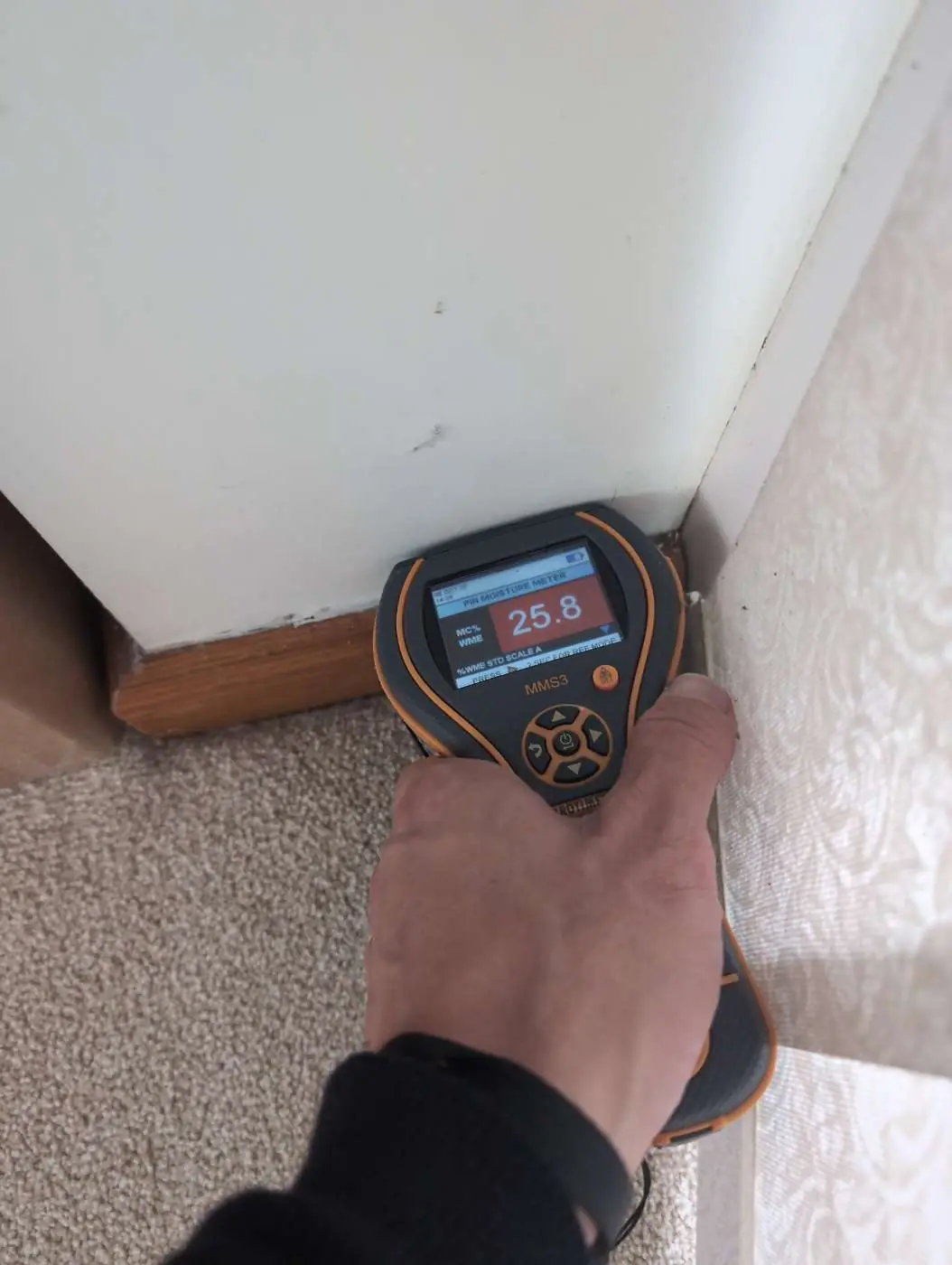
| Wall reveal at the external door, skirting level | 25.8 %WME |
| Opposite reveal of the external door, skirting level | 16.1 %WME |
| Control, wall to the living room | 10.5 %WME |
| Conservatory air | 20.2 °C, 50.2% RH |
| Dew point | 9.5 °C |
| Surface of that same reveal | 8.1 °C, 1.4 degrees below the dew point |
Condensation was forming on the reveal at the time of the survey, at exactly the point of the 25.8 reading. The reveal is the coldest surface in the room, most probably a cold bridge around the door frame where the wall has less insulation. The conservatory has opening windows only, no trickle vents and no gap under the door, so moist air has no steady way out.
Condensation on the cold reveal is the most probable cause. A failed seal at the door frame would let water reach the same spot, and cannot be ruled out without a reading after heavy rain.
There is also a tide mark along the joint between the wall and the conservatory roof. Readings taken along it were dry on the day, so it may be old staining or failed sealant rather than a current leak. Outside, overgrown planting stands against the base of the conservatory wall.
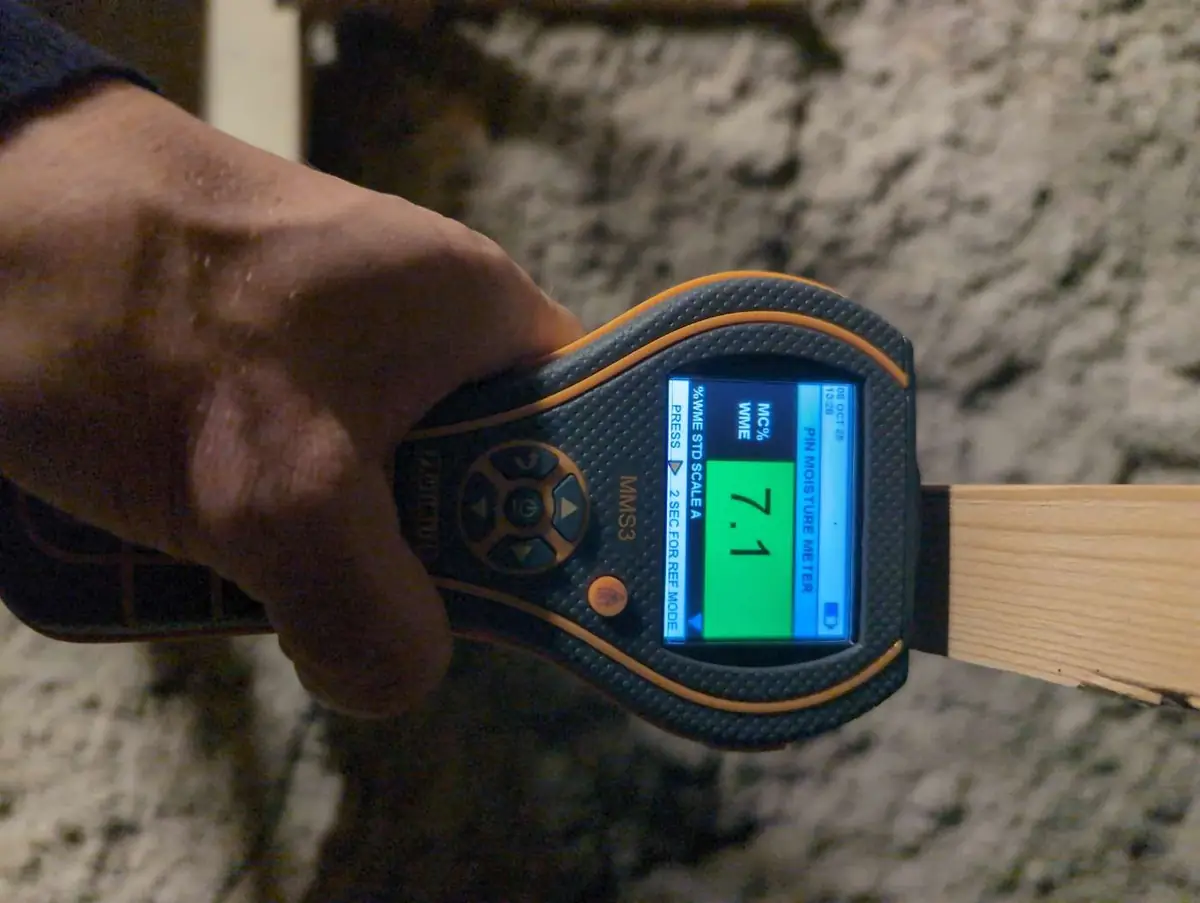
Every timber in the loft read dry, 6.2 to 7.1 %WME against a control of 6.6 on a truss near the chimney. One rafter shows slight staining but reads dry, so it is old. No mould was seen, and no salt deposits could be seen on the blockwork.
But the loft air was 21.5 °C at 51.3% relative humidity, a dew point of 11.0 °C, and the north gable was 6.7 °C, 4.3 degrees below it. Condensation was forming on the gable at the time of the survey.
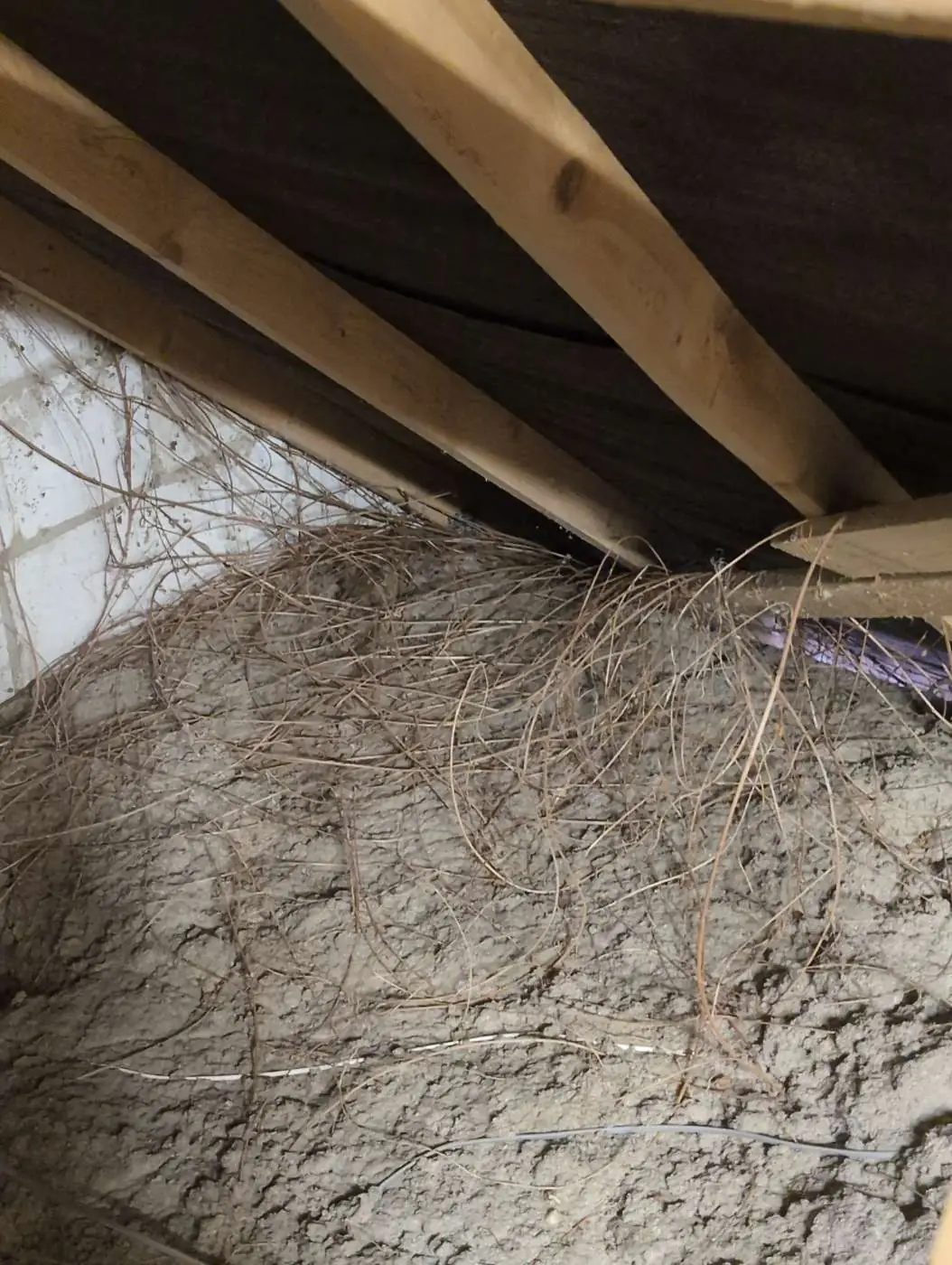
The loft air held about as much moisture as the rooms below, a vapour pressure of 1.32 kPa against 1.04 outside, when a loft ventilated to the outside should be close to the outside figure. That points to warm, moist air from the house getting up into the loft, most probably through the thin insulation over the boarded section and gaps in the ceiling, and condensing on the coldest surface. The timbers are dry, so it has not yet affected them.
Two other things in the loft need attention before they let water in: the roofing membrane is torn around a flue pipe, and plants are growing in through the soffit at the north east corner.
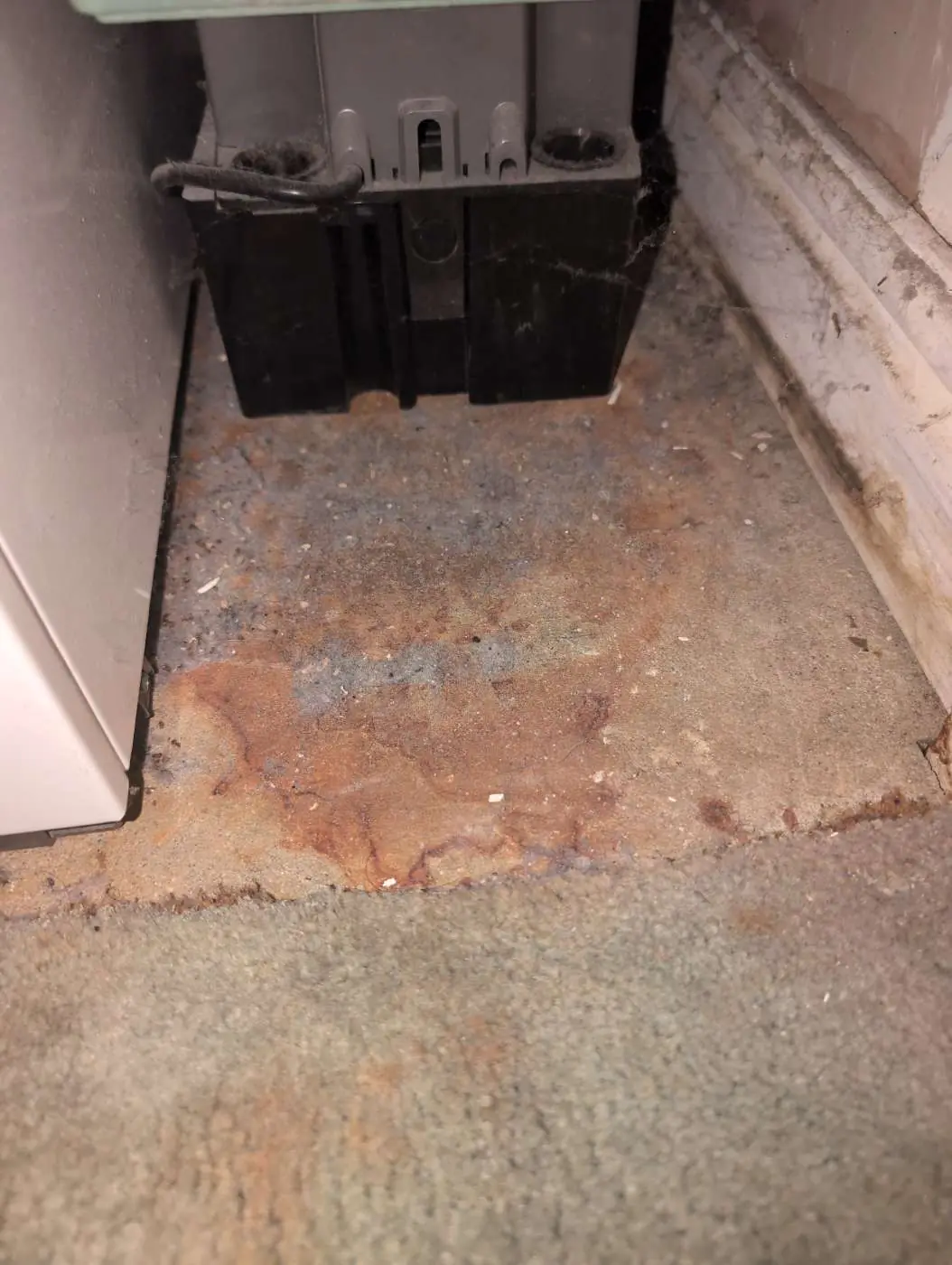
Bedroom 2, the study, the kitchen, the WC and the living room had no defects, with controls of 6.4 to 8.1. In the hallway boiler cupboard there are old watermarks, rust staining on the carpet and trace mould at the base of the skirting. It read dry, so this looks like an earlier leak.
Across the house the vapour pressure excess was 0.15 to 0.28 kPa, which, as an indication from a single visit, is low: the house is not producing more moisture than its ventilation is removing. The en suite main, the conservatory reveal and the loft gable are cold surfaces, not signs of a damp house, though the moisture reaching the loft shows the ceiling is letting warm air through.
Photographs from the survey, exactly as taken.
On the evidence there is no rising damp in this property, and the damp flagged comes from a few separate sources, each of which can be put right.
In the en suite, condensation on the unlagged incoming cold water main, made colder by the unsealed opening around the pipe outside, and water getting past the shower seal. In the conservatory, condensation on a cold door reveal in a room with no steady ventilation. In the loft, dry timbers, but warm, moist air from the house reaching the loft and condensing on the cold north gable.
First, a safety point separate from the damp. The owner reported that the outdoor socket serving the garage had been water damaged and was tripping the garage electrics, and that an electrician was due. Confirm that the work has been done and the circuit tested before it is used.
Lag the incoming cold water main in the en suite and seal the opening around it outside. Reseal the shower.
Ventilate the conservatory with regular window opening and trickle vents, and have the door reveal checked for a cold bridge and insulated, which is what stops the condensation for good. Check and reseal the door frame and the wall to roof joint where they have failed.
Top up the loft insulation over the boarded section and seal the gaps in the ceiling, around the hatch, light fittings, pipes and cables. Make good the torn membrane around the flue, and cut back the plant coming through the soffit.
Outside: cut back the planting against the walls, lower the soil below the bedroom 2 window to at least 150mm below the damp proof course, regrade the east side to fall away from the wall, clear and reseal the gutters, confirm where the downpipe by the oil tank discharges, and cap the chimney pot. Monitor the cracked verge mortar on the north gable.
Fit an extract fan in the en suite, have the boiler cupboard pipework and appliance checked, and open the trickle vents that are fitted but were closed.
Last, once the readings have dropped, replace the water damaged en suite skirtings and regrout beside the main, so the new skirting goes onto a dry wall.
The report records this as highly probable on the evidence, not confirmed, and names what would close the gap: readings at the en suite skirting once the main is lagged and sealed and the shower resealed, a pressure test of the en suite supplies, readings at the conservatory door reveal after heavy rain and again in cold weather to separate rain from condensation, and the loft gable surface temperature and humidity in cold weather once the insulation is topped up.
Fixed fee from £350. We carry out no remedial work, sell no products, and take no commission or referral fee from anyone who carries out repairs.
Request a call back How we survey