The evidence
Photographs from the survey, exactly as taken.
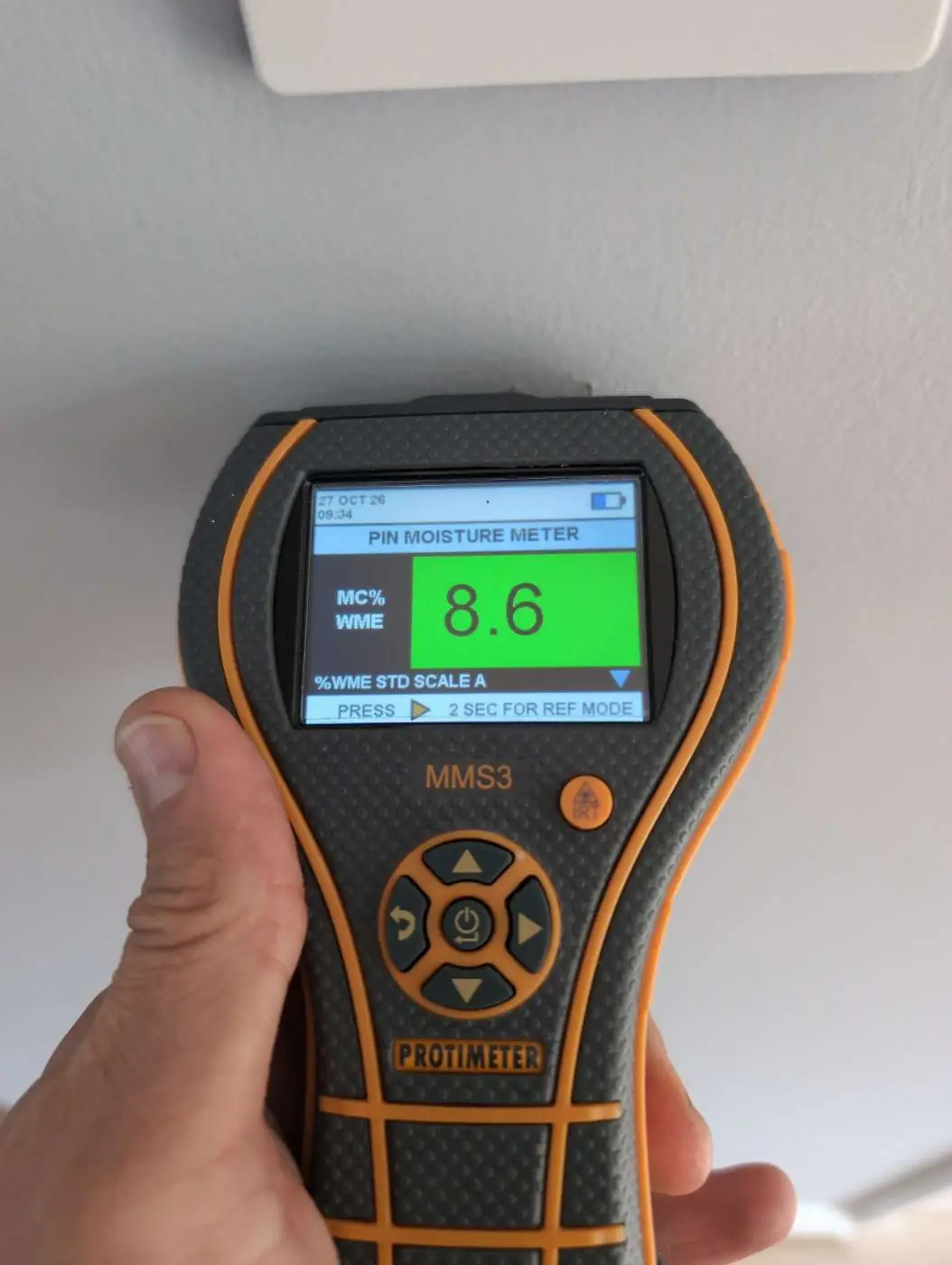
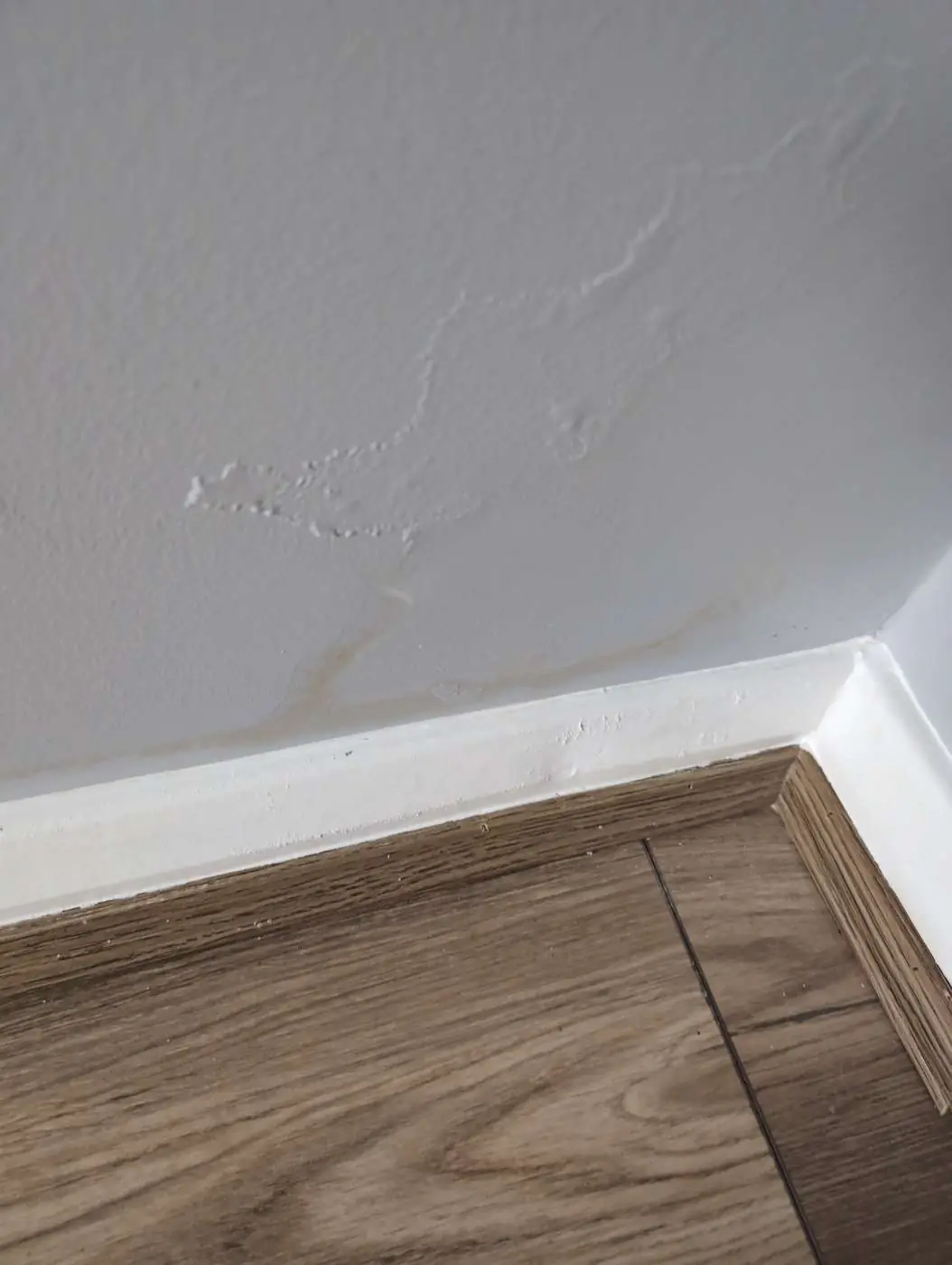
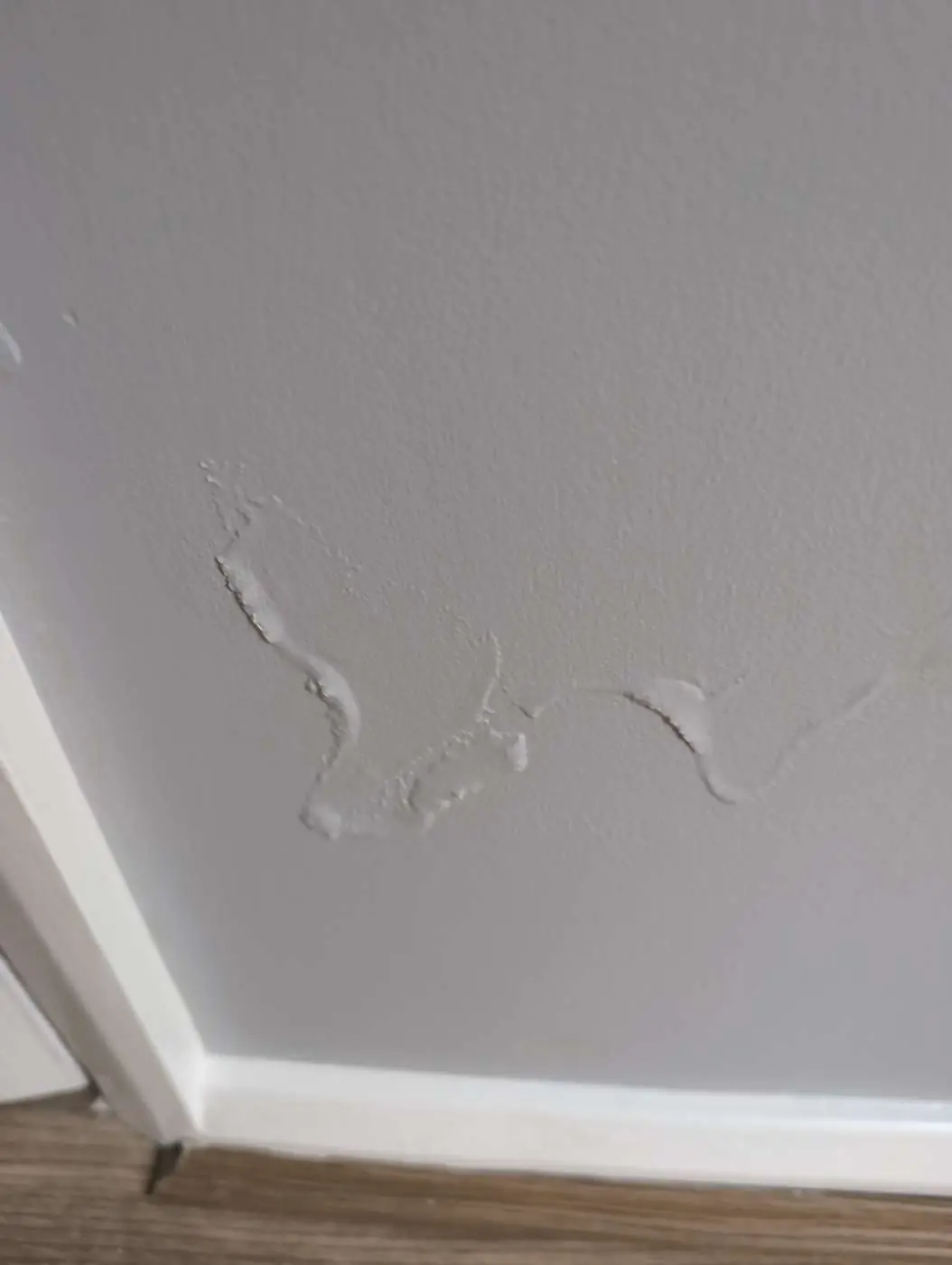
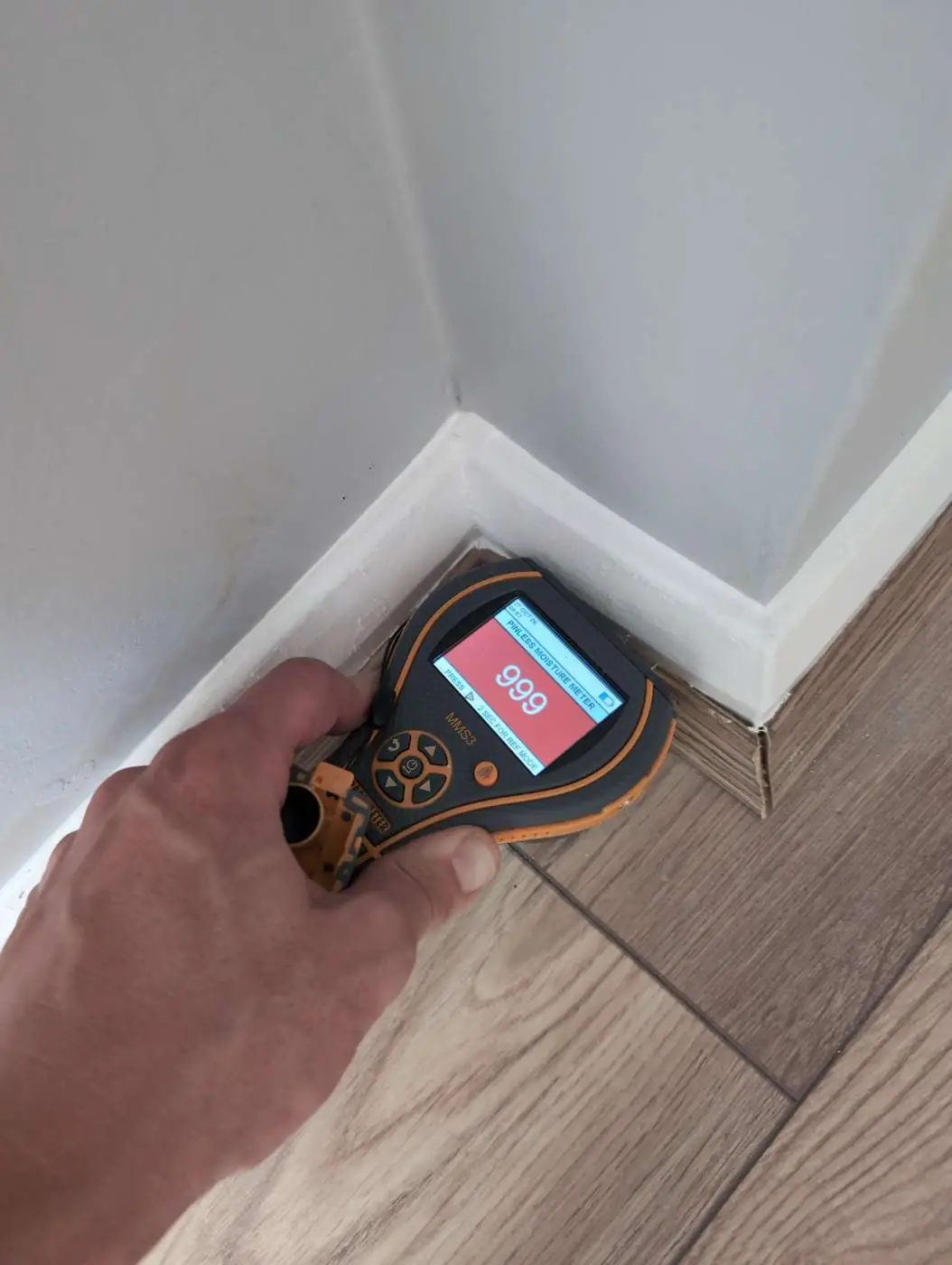
Damp patches along the party wall of an open living and dining room came back through new decoration. The readings said where to look: at the floor, and at the kitchen next door.
See exactly what you get: read a real Vigilant report, published with the client's permission.
The owner had redecorated, and the staining came back through the new paint. It had first been noticed about two weeks before the survey. They also told us that the outside tap, which is normally isolated inside, had been left on for about two weeks during work in the garden.
We were asked to establish the cause of the damp patches along the party wall in the ground floor living and dining room, and the work indicated.
Stains that come back through fresh paint at the base of a wall are often put down to rising damp. This page is about why the readings pointed somewhere else.
A semi detached house of 1981 to 2002 with a solid ground floor, as reported. The affected room is an open living and dining room beside the kitchen. The party wall has no external face.
The survey was carried out after heavy rain in the previous 48 hours, with light rain at the time of the inspection. That matters: it is the condition in which rain or a roof problem would show, if there was one.
The control reading, on an internal partition wall, was 8.6 %WME. Then every wall in the room was mapped at four heights.
| Wall | Skirting, 100mm | 600mm | 1200mm and below the ceiling |
|---|---|---|---|
| Party wall | 21.9 to 37.0 | 8.3 to 13.3 | 6.3 to 9.1 |
| External wall | 32.3 to 55.2 | 8.2 to 9.4 | 8.1 to 9.4 |
| Second external wall | 26.8 to 30.1 | 8.5 to 10.3 | 8.1 to 8.8 |
| Internal wall to the kitchen | 21.8 to 34.5 | 11.1 to 15.2 | 7.7 to 8.2 |
A further reading of 81.8 on the party wall was taken with the meter set to a timber scale, so it is not compared with the others.
Every wall, including the internal wall to the kitchen, reads high at the floor and close to the control by 600mm. Rising damp needs a route from the ground, and the damp proof course was visible outside at the rear, 150mm above the level gravel, with nothing seen bridging it. Rain or a roof defect would wet walls from above or through their outer face, and the internal wall has no outer face. What reads high on every wall at once, and only at the bottom, is water held at floor level.
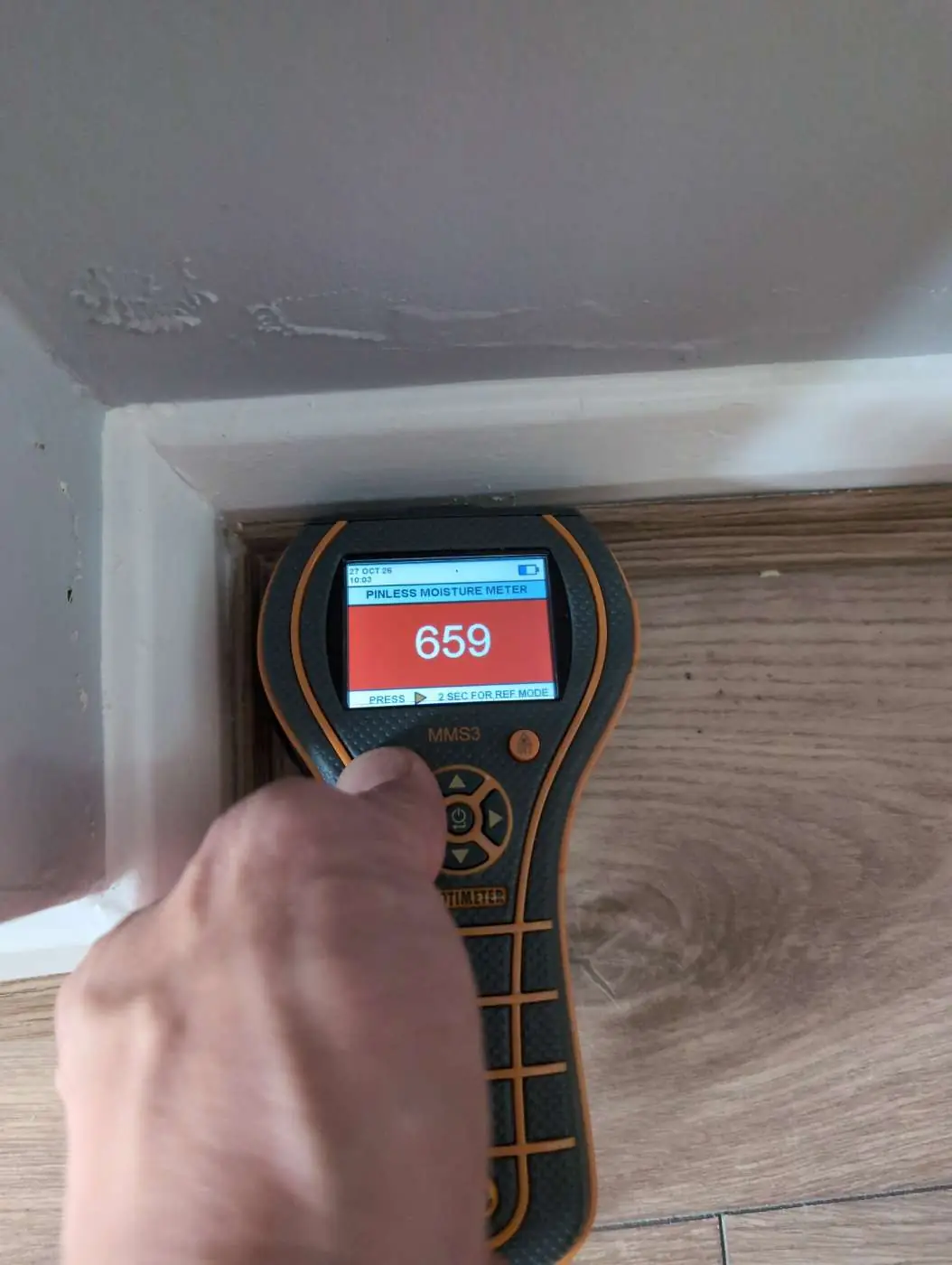
The floor along the party wall was measured with a pinless meter, which gives comparative readings only. They were raised along the whole length of the wall, from 132 to 174, with the meter reaching its maximum of 999 at one point near the pilaster. A further reading of 659 was taken on the other side of the pilaster. No separate pinless control was taken on a dry area of floor, so these are compared with each other along the wall, where they follow the floor rather than the wall.
Staining, and plaster blistering and lifting just above the skirting, were seen and photographed along the base of the affected walls.
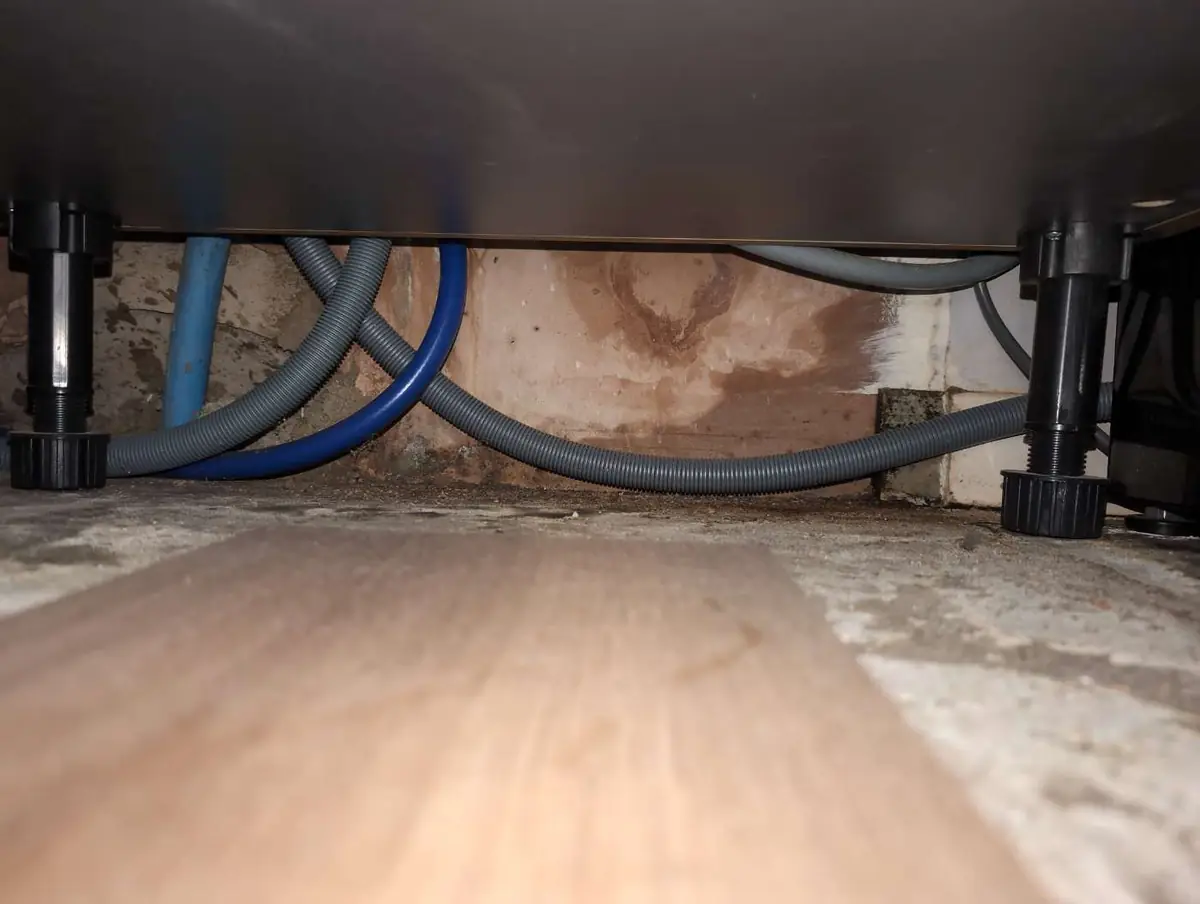
Under the kitchen sink units, the base of the wall behind the supply and waste hoses was stained, and salts were seen on the floor.
Several possible sources sit close together behind the sink:
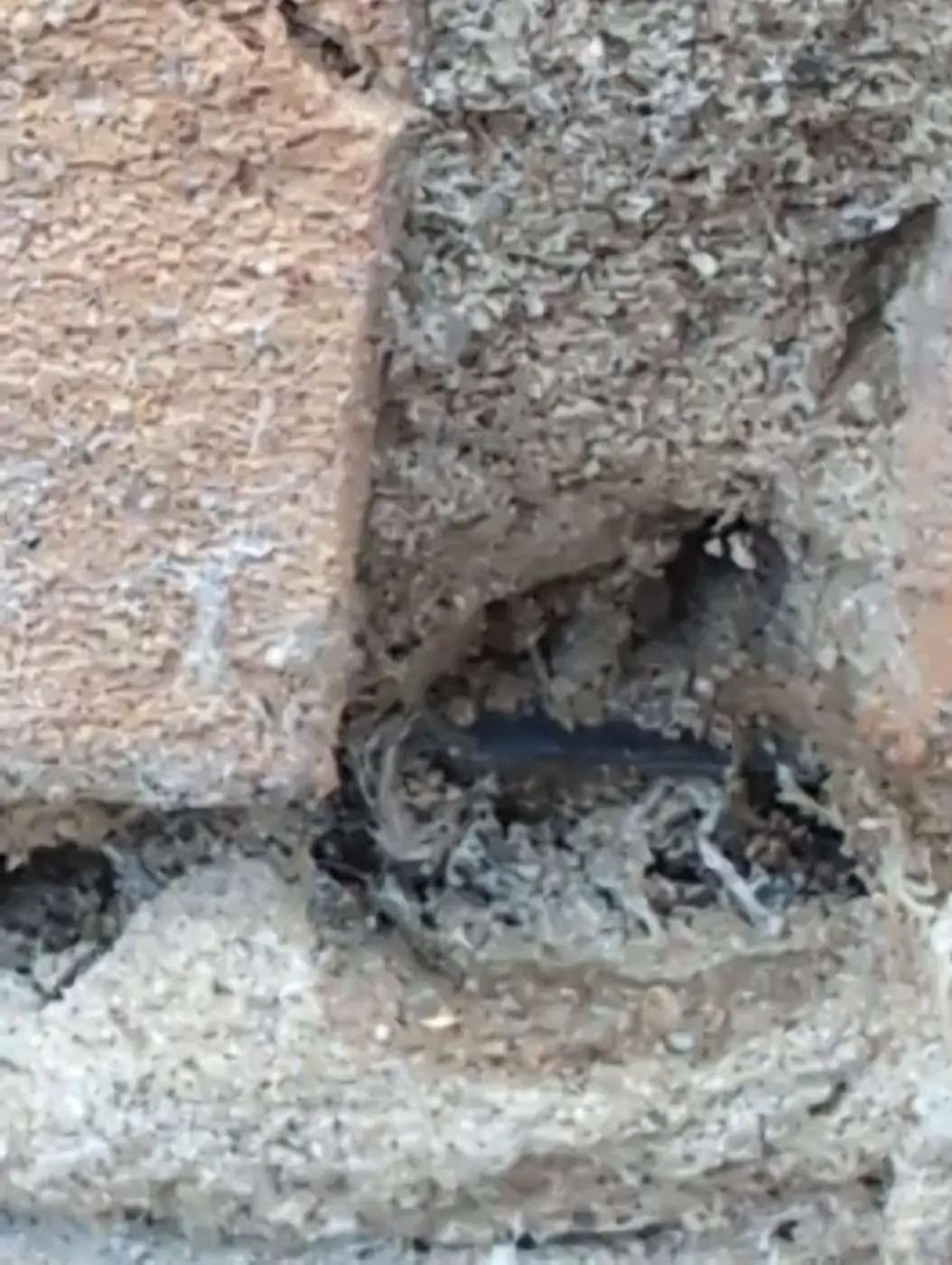
The outside tap and its pipe, where it passes through the wall. The tap was recorded as dripping, and the seal where its pipe passes through the wall had failed.
The dishwasher, the washing machine and the sink waste.
The heating pipework. A radiator stands on the affected party wall, and a heating leak cannot be ruled out from a single visit.
This was a single visit, so which of these is the source could not be confirmed. The report does not pick one. It says how to find out.
Photographs from the survey, exactly as taken.
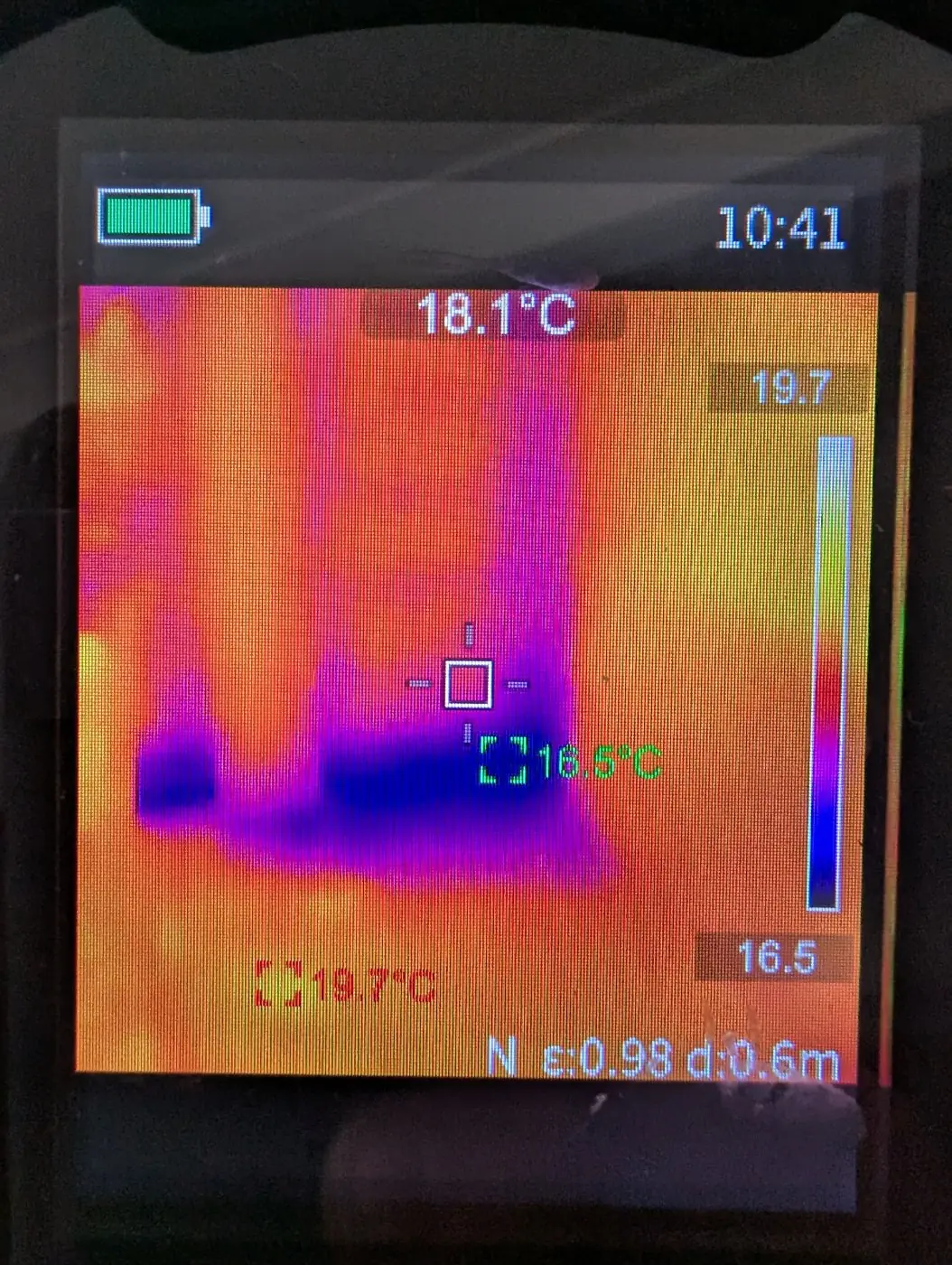
The most probable explanation on the evidence is water escaping at floor level behind or under the kitchen sink units and spreading beneath the floor covering into the living and dining room, where it is drawn into the base of the walls.
The possible sources are the outside tap and its pipe where it passes through the wall, the dishwasher, the washing machine, the sink waste and the heating pipework. This was a single visit, so which of these is the source could not be confirmed.
The party wall has no external face, so no external work would reach it. Only stopping the water at floor level does. The pattern does not point to the roof, to rising damp or to condensation, and no damp proof course or chemical treatment is indicated.
Test the outside tap, the dishwasher, the washing machine and the sink waste in turn, and repair the one found leaking. Several supplies and wastes sit together behind the sink units, and testing each in turn is the simplest and least costly way to find which one is putting water onto the floor, so that only that one is repaired. A pressure test of the heating would rule the radiator pipework in or out.
Then let the floor and walls dry.
Optional and cosmetic: once the walls have dried, seal the stains with a stain blocking primer and redecorate. It is not a necessary measure and is at the owner's discretion.
Do not redecorate before the source is found and the walls have dried. It is likely to see the staining come back, as it already has once. Do not have the walls damp proofed or chemically treated. There is nothing on this evidence for either to address.
The report records this as highly probable on the evidence, not confirmed, and names what would close the gap. Testing each water supply and waste in the kitchen in turn would settle which one is the source. A pressure test of the heating would rule the radiator pipework in or out. Lifting the floor covering at the kitchen units, with the owner's consent, would show where the water is reaching the floor and how far it has spread. A salts test of the affected plaster, with the control wall as the benchmark, would show whether the readings are moisture or salts left behind.
Fixed fee from £350. We carry out no remedial work, sell no products, and take no commission or referral fee from anyone who carries out repairs.
Request a call back How we survey